Human Design Gate 2: Direction of the Self — Meaning & Theme
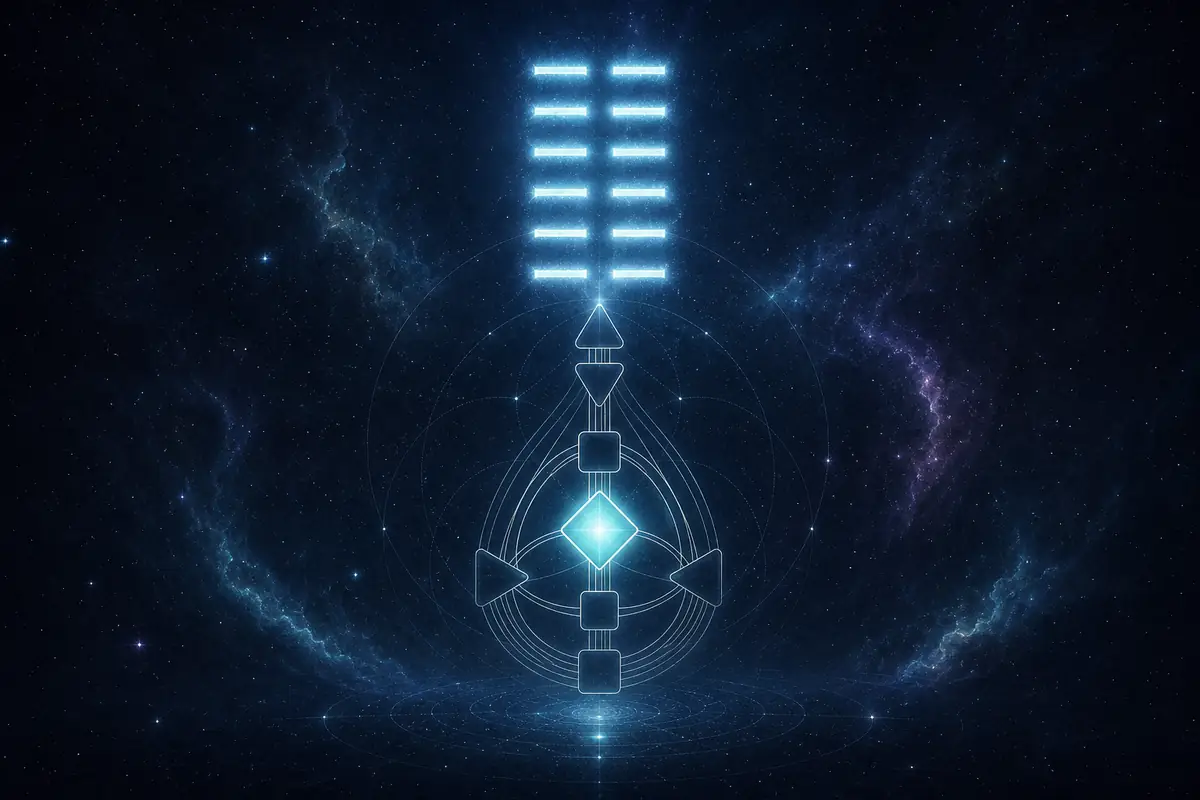
Gate 2 is called Direction of the Self, and the name carries a quiet paradox: it is also the gate of the Receptive. In Human Design it sits in the G centre, the centre of identity, direction and love, and its hexagram is The Receptive. The gate tends to describe an orientation that is felt rather than planned, a way of knowing which way to face before knowing where the road ends. A planet in this gate on the Personality or Design side defines it, and that orientation becomes a standing feature of the chart rather than a passing mood. Its partner, gate 14 in the Sacral, supplies the power a direction can be put behind, and that is where the gate's most distinctive story lies.
Facing before arriving
The direction in gate 2 is not a route. Human Design treats it as a bearing: a felt sense of what is right to move toward, held without needing the map. Someone with the gate defined can seem oddly sure about orientation while being unable to justify it step by step, because the knowing concerns the heading rather than the plan. That can read as vagueness to anyone who wants milestones, and as relief to anyone who has tried to schedule intuition. A bearing can be checked cheaply by noticing which way the body leans when two options sit side by side, before anyone asks for reasons.
Receptive does not mean passive
The name of the hexagram, The Receptive, can suggest waiting around. One reading is that it describes a vessel that gives form to an energy rather than generating it, and holding a direction is an active thing to do. Receiving a push from elsewhere and then steering it is a different job from supplying the push. The gate's task is orientation rather than acceleration, and that is why it can look unhurried even when the person carrying it is busy.
Keeping the bearing under outside pressure
Because the direction is felt rather than argued, it can be talked out of existence by a confident person with a plan. The pattern to watch is swapping the felt bearing for a borrowed one because the borrowed one comes with reasons. A bearing that is truly one's own can return even after it has been set aside, and noticing that return is often the first sign the gate is doing its work.
Gate 2 left hanging without gate 14
Gate 2 forms the 2-14 channel, Beat, with gate 14 in the Sacral. When gate 2 is defined and gate 14 is not, gate 2 is a hanging gate: defined, but without its channel partner active, so it reaches for gate 14. Reaching is the useful word. The direction is there, yet the power to carry it out is not generated in that part of the chart, so it can look for it in other people, jobs or projects that supply the missing drive. That describes how the gate behaves rather than a flaw. Meeting gate 14 in a partner or colleague can complete the channel for as long as the two are together. The same direction can be put behind a project that drains it or one that fits it, and not every source of power suits the heading, which is why Strategy and Authority matter more here than the label of the gate.
Gate 2 gives a bearing, and a bearing can be held without any map. It can say which way to face without saying how far the road runs.
Where a felt bearing meets a group decision
Groups tend to ask for reasons, and a felt bearing rarely arrives with them. Someone with gate 2 may sit through a discussion knowing which option points the right way and be unable to say why. Offering the bearing as a preference rather than an argument, and noticing which option still feels aimed correctly after the conversation has moved on, tends to be more useful than trying to win the point. The same faculty works on small choices, such as which road to take or which of three offers feels pointed right, and practice there tends to make the larger ones clearer.
Orientation that does not need to announce itself
A bearing can be carried quietly, with no announcement and no need to defend it. Gate 2 is the gate across the wheel from gate 1, Self-Expression, and where gate 1 tends to push an expression outward, gate 2 tends to hold the direction in which it is aimed. In the tropical zodiac gate 2 spans 13°15' to 18°52' Taurus, and the Sun passes through it in about the week of May 3 to 9, a date that shifts by around a day from year to year.
What Human Design is and how to read a bodygraph — read the guide →
Get your free Human Design chart and AI reading — create an account →
Frequently Asked Questions
What weakness can gate 2 show when it stands alone?
Standing alone, gate 2 has a direction but not the drive of gate 14 behind it, so the person may depend on outside sources of energy to act on the bearing. That is a tendency, not a defect. Knowing where the power comes from, and choosing it deliberately, usually matters more than the gate itself.
What happens when gate 14 is also defined?
Both gates together form the 2-14 channel, Beat, which links the G centre to the Sacral. The direction of gate 2 then has its own source of power inside the chart, so the pair works as one steady current rather than as a gate reaching for a partner. The defined channel also helps define both centres.
Is it true that a hanging gate is incomplete?
Not in the sense of being weak. A defined hanging gate is fully active; it simply has no defined channel partner, so it reaches for that quality in other people or circumstances. A bodygraph can have several hanging gates, and the label describes how the energy behaves rather than ranking it below a full channel.
How can I tell whether gate 2 is hanging in my chart?
Look at your bodygraph and check whether gate 2 is coloured in while gate 14 is not. If both are coloured, they form the 2-14 channel and gate 2 is not hanging. If only gate 2 is coloured, it is hanging. A free chart shows every defined gate, so you can confirm it in a few seconds.