Sun in Scorpio: Meaning, Personality & Traits
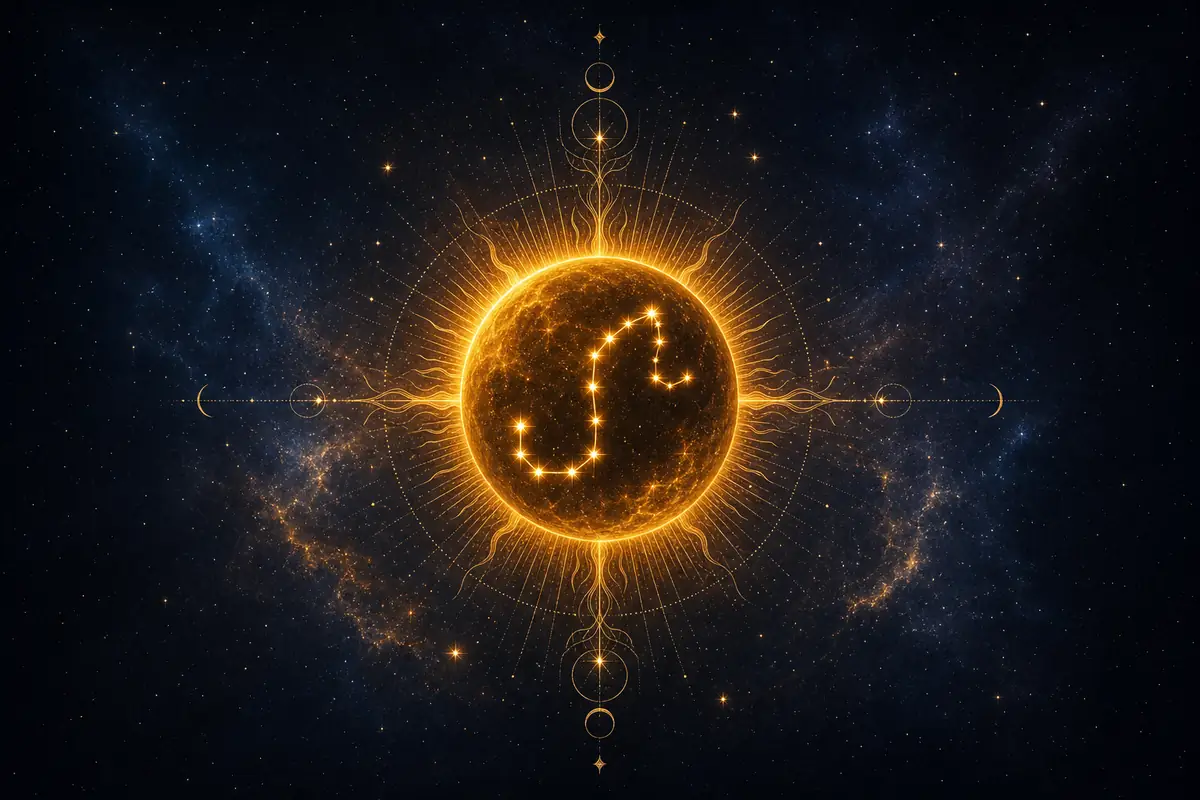
Scorpio is unusual among the twelve signs for having two rulers actively used in practice rather than one. Traditional astrology gives it to Mars, the only planet with a claim before Pluto's discovery in 1930; modern astrology gives it to Pluto instead. The Sun's own dignity in Scorpio is peregrine under either system — no rulership, no exaltation, no fall, no detriment — but which ruler you foreground changes the character of the reading almost entirely, and that choice, rather than any single fixed description, is what this page is actually about.
Two rulers claim this sign, and they do not agree
For most of astrology's history Mars ruled every sign it now shares with a modern planet, Scorpio included. Pluto's discovery gave modern practice a second candidate, and both rulerships are still taught and used side by side rather than one having simply replaced the other. Neither assignment changes the Sun's own dignity here — it remains peregrine regardless — but each ruler foregrounds a genuinely different set of qualities in how the placement is read, and a full reading generally draws on both rather than settling the argument.
Read through Mars: identity as a strategist
Under the traditional ruler, Scorpio's intensity is disciplined rather than spent. Mars here is not the immediate, unfiltered impulse it is in its own sign of Aries — fixed water holds the charge and times its release. Read this way, the placement produces someone who commits resources carefully, chooses engagements rather than stumbling into them, and treats restraint itself as a form of strength, saving force for the moment it will actually matter instead of spending it as it arises.
Read through Pluto: identity as something that metabolises intensity
Under the modern ruler, the emphasis shifts from strategy to transformation. Pluto's territory is what gets buried, discarded or feared by everyone else, and a Sun read through Pluto is comfortable operating in exactly that material — loss, power, what other people won't look at directly. This version of the placement is less about calculated advantage and more about a capacity to be remade by an experience rather than simply enduring it, which is a harder and slower kind of strength to build a reading around.
Fixed water: intensity that is held, not spent
Both readings share a modality underneath them. Scorpio is fixed water, unlike Cancer's cardinal water, which reacts immediately, or Pisces's mutable water, which diffuses outward. Fixed water contains what it feels rather than discharging it, which is the mechanical reason both the strategist and the transformer descriptions work — control and depth both require the same underlying capacity to hold rather than release.
- A calm surface is not the same thing as low intensity underneath it.
- Trust is extended slowly and, once broken, rarely re-extended.
- Crisis is handled more steadily than ordinary daily friction.
- Curiosity runs toward what is hidden rather than what is displayed.
- Recovery from loss tends to change the person rather than just pass through them.
Mars, then Jupiter, then the Moon, layered into one sign
The first decan, 0–10°, is ruled by Mars through Scorpio itself, the sign's most concentrated and least diluted form. The second, 10–20°, comes under Jupiter through Pisces, opening the intensity outward toward meaning and belief rather than keeping it contained. The third, 20–30°, comes under the Moon through Cancer, folding feeling and memory into what is otherwise a controlled and guarded placement, and softening its edges without loosening its grip.
Across from Taurus, the pull between keeping and burning through
Scorpio sits opposite Taurus, ruled by Venus, and the axis runs between two opposite instincts about resources and change. Taurus wants to keep what it has secure and unaltered; Scorpio wants to go through the fire and come out changed. A Sun in Scorpio often has to negotiate this pull directly — deciding what is actually worth holding onto and what needs to be let go through in order to move forward, rather than treating either instinct as automatically the right one for every situation it meets.
You are not obliged to pick one ruler and discard the other. Most working astrologers use both, reading Mars for how the intensity is applied and Pluto for what it is ultimately for.
What is a birth chart? Read the full guide →
Get your personal AI birth chart reading — create a free account →
Frequently Asked Questions
Does Mars or Pluto rule Scorpio?
Both, depending on the tradition. Mars is Scorpio's traditional ruler, used before Pluto's discovery in 1930. Modern astrology assigns Pluto instead. Most practising astrologers read a Scorpio placement through both rulers rather than choosing one and discarding the other.
Is the Sun in Scorpio a strong placement?
The Sun holds no essential dignity in Scorpio under either rulership — it is peregrine, meaning no domicile, exaltation, fall or detriment. Strength in the everyday sense comes from the sign's fixed water nature, which holds and controls intensity rather than dispersing it, not from formal dignity.
What's the difference between the Mars and Pluto readings of Scorpio?
The Mars reading emphasises strategy — disciplined, deliberately timed action. The Pluto reading emphasises transformation — a capacity to be remade by intense experience rather than simply surviving it. They are not contradictory; they describe how the same underlying intensity gets applied versus what it is ultimately for.
How does the Cancer decan soften Scorpio without loosening its grip?
The third decan, 20–30°, is ruled by the Moon through Cancer, folding feeling and memory into what the first two decans keep tightly controlled — Mars through Scorpio itself (0–10°), the most concentrated expression, and Jupiter through Pisces (10–20°), opening the intensity toward meaning. The Cancer decan doesn't relax that control; it adds emotional depth while the guard stays in place.