Human Design Gate 55: Spirit — Meaning & Theme
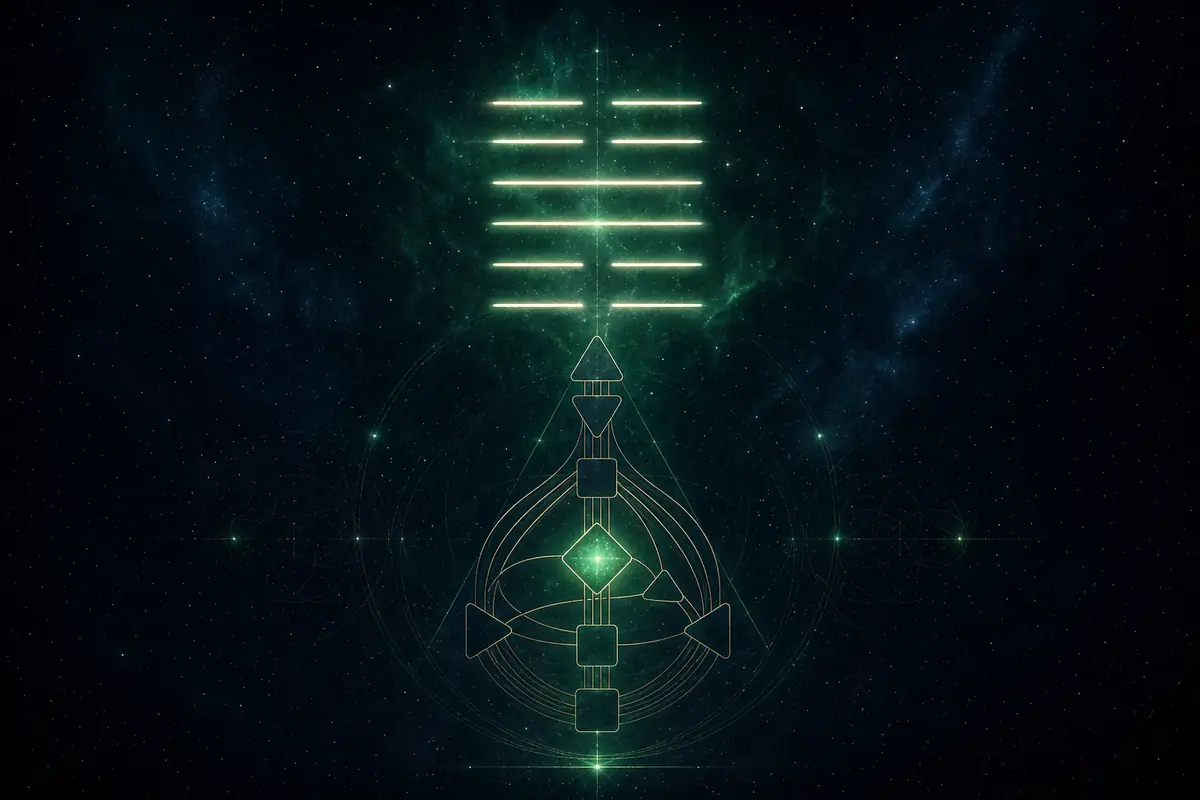
Some days feel full and others feel empty, with no obvious change in circumstances to explain the difference. Human Design gives that swing a gate: gate 55, Spirit. It belongs to the Solar Plexus and carries the hexagram Abundance. A planet on the Personality or Design side defines the gate, and the Sun moves through its range of 0°08' to 5°45' Pisces from about February 18 to February 24 each year. Gate 59, Sexuality, lies opposite on the wheel. The partner is gate 39, Provocation, and the pair form the channel 39-55, Emoting.
Spirit that rises and falls
The keynote of Spirit in Human Design is tied to mood, and in particular to its movement. A person with gate 55 defined may notice that their sense of vitality is not constant: there are stretches of buoyancy, and there are quieter stretches in which the same life looks greyer. One reading is that the gate describes how strongly a person's inner weather can colour what they feel is possible, rather than saying which direction it blows.
The name does not promise happiness, and it does not predict hardship. It points at a quality of inner life that can lift or sink, and it leaves the content to the individual.
Inside the Solar Plexus, an awareness and motor centre
Human Design counts the Solar Plexus among the awareness centres and also among the motor centres, which makes it unusual: it is a place where feeling is registered and where energy is generated. The centre is associated with emotion, and with the idea that emotion moves in a wave, with rises, falls and a long stretch between them. Gate 55 is one of the gates in this centre, so its theme of spirit is read as an emotional one.
A gate alone never defines a centre. If the Solar Plexus is defined in a chart, through a complete channel, then the wave is part of that person's consistent makeup, and gate 55 is one way it can be coloured. If the centre is undefined, the gate still brings its theme, but the wave is then experienced as something taken in from the people nearby and amplified, not as a steady personal rhythm. That distinction is worth checking in the full chart before drawing conclusions.
A mood is a weather system, and weather passes; it makes sense to ask what a given day can hold before deciding what the whole season means.
When a day feels plentiful and when it does not
The hexagram attached to this gate is named Abundance. Placed beside a keynote about spirit that rises and falls, the name can prompt a question about fullness and its opposite, offered as a pairing of images with no claim about what the original text intended. A reader might use it simply to notice when a day feels plentiful and when it does not, and to ask what changed between the two.
When feeling is stirred and then voiced
Gate 39 sits in the Root, so the channel 39-55 runs between the Root and the Solar Plexus. When both gates are defined the channel is complete, and it defines both centres. Human Design calls it Emoting. One way to see the pairing is that gate 39 supplies a spark of provocation and gate 55 carries the emotional response to it, so that feeling is stirred and then expressed. Where gate 55 is defined without gate 39, it is a hanging gate and may reach toward people who bring that spark.
Taking mood out of the verdict seat
A practical difficulty with a gate about spirit is that a low day can seem like proof that something is wrong with the work, the relationship or the plan. A person with the theme might find it useful to separate how a day feels from what is true about their life. Writing down the date of a hard stretch, then looking back a week later, is a modest way to see how often a mood has lifted without any outside change.
None of this asks anyone to suppress feeling. The idea is closer to giving a mood its room without letting it chair every meeting. That is a suggestion, not a Human Design rule, and it will suit some people more than others.
Catching a mood from the room
Emotion can seem contagious, and a gate in an emotional centre can make that obvious. A person with gate 55 may find that a warm room lifts them and a tense one weighs on them. Noticing whose mood is whose is a skill that takes practice, and a few quiet minutes after a charged conversation can help sort it out. The aim is not to avoid company but to recognise how much of a feeling began elsewhere.
What Human Design is and how to read a bodygraph — read the guide →
Get your free Human Design chart and AI reading — create an account →
Frequently Asked Questions
How can someone sort their own mood from a borrowed one?
A few quiet minutes after a charged conversation can help, as can noticing whether a feeling arrived before or after the company did. Human Design offers no test for this, so it is a practice and not a rule. The aim is to recognise how much of a feeling began elsewhere.
How do people with an undefined Solar Plexus experience this gate?
Human Design describes an undefined centre as open, which means it takes in and amplifies what is around it. For gate 55 on an open Solar Plexus, the theme of spirit may feel more like absorbed mood than a steady inner rhythm. It is a pattern to test against experience, not a certainty.
Should the name Spirit be read as a promise of cheer?
No. The keynote concerns the movement of mood, its rising and falling, and not which direction it takes. The name Spirit does not promise a cheerful life and does not predict a heavy one. It points at a quality of inner life that can lift or sink.
How long should someone track a mood before judging it?
Human Design gives no timetable. One modest practice is to write down the date of a hard stretch and look back a week later, which shows how often a mood lifted without any outside change. Longer records can reveal patterns, but the length is a personal choice.