Dhanishta Nakshatra: Traits, Padas & Compatibility
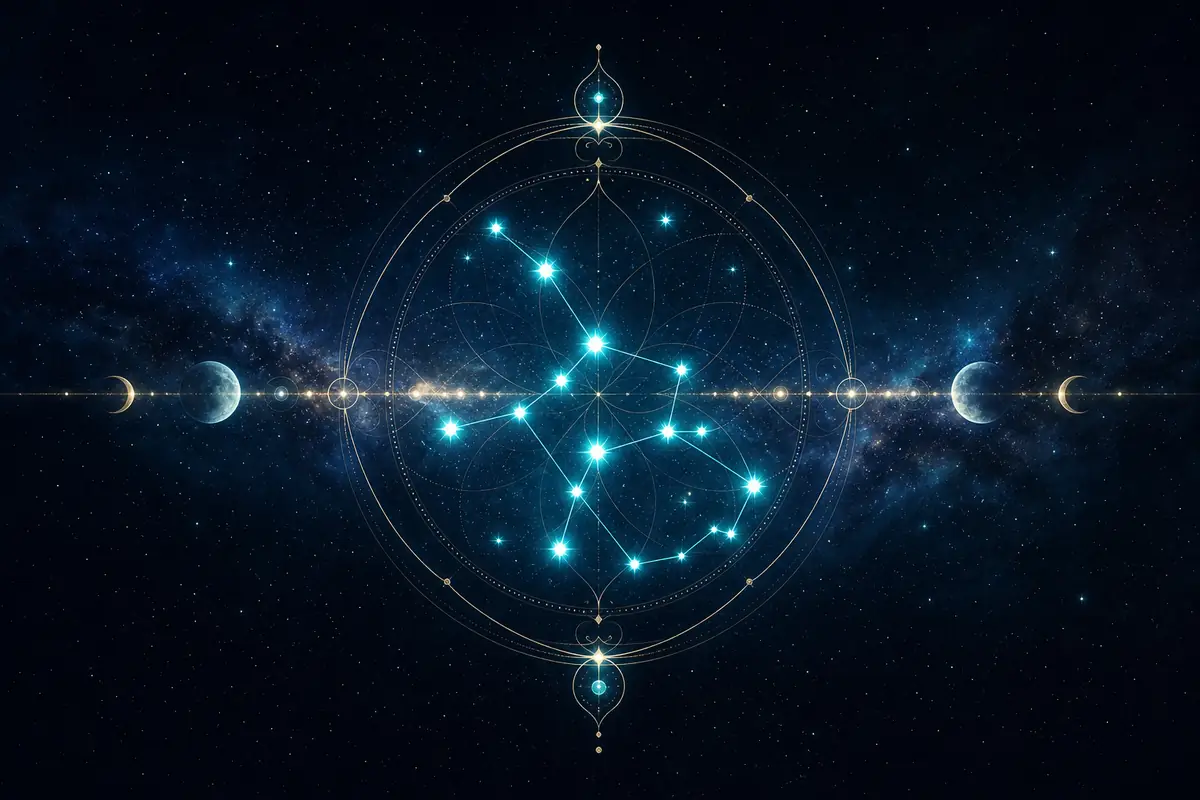
Dhanishta Nakshatra, the twenty-third lunar mansion, is the nakshatra of abundance, rhythm, and the music of the cosmos. Its name means 'the wealthiest' or 'the most beneficent', and its symbols — a drum and a flute — capture both its vibrant, rhythmic energy and its capacity for celebration. Presided over by the Vasus, the eight elemental gods who represent abundance in all its forms, Dhanishta combines Mars's dynamic drive with a joyful, communal, and deeply musical spirit.
The eight Vasus and the wealth Dhanishta is asked to distribute
Dhanishta spans 23°20' Capricorn to 6°40' Aquarius (Kumbha) in the sidereal zodiac, bridging Saturn's two very different signs — Capricorn's ladder of ambition and Aquarius's communal vision. Its presiding deities are the Ashta Vasus, the eight elemental gods of fire, earth, wind, water, and sky who personify wealth in every form the material world takes. The detail worth holding onto is that the Vasus are not hoarders; they are the substance of the world itself, gods of what circulates rather than what is stored. Dhanishta natives generate abundance easily, and they are at their best when it is moving through them.
What the drum and the flute encode about Dhanishta's timing
Both of Dhanishta's symbols are instruments, and both are about time rather than sound. A drum sets the beat that everything else must fall in with — the tempo of a ritual, a group, or a creation cycle. A flute carries the melody that rides over that beat, the personal, longing line. Read together they describe how these natives operate: they impose a rhythm on a room, then improvise on top of it. The pairing also explains the sign's structural weakness — instruments need other players, and Dhanishta natives working alone lose most of what makes them effective, because their real gift is synchronisation.
Mars exalted in Capricorn, and the one nakshatra that holds it
Dhanishta's ruling planet is Mars (Mangal), the planet of energy, courage, and initiative — and Mars's sidereal exaltation degree, 28° Capricorn, falls inside Dhanishta's second pada. No other nakshatra contains it. This is why Dhanishta reads as more forceful than its neighbours: Mars here is operating at full strength inside Saturn's most disciplined sign, which converts raw aggression into stamina and timing rather than temper. Athletes, soldiers, and founders with strong Dhanishta placements report the same thing — an ability to keep pushing long after the original motivation has burned off.
How Dhanishta behaves when the tempo belongs to them
- Energetic and dynamic — moves through life with speed, rhythm, and infectious enthusiasm.
- Musically gifted — a natural affinity for rhythm, dance, and performance.
- Generous and community-oriented — enjoys sharing wealth and creating collective abundance.
- Ambitious — Mars drives Dhanishta to compete and excel.
- Socially magnetic — builds communities wherever they go.
- Adaptable — the Capricorn–Aquarius bridge gives range across practical and visionary work.
The Bhishma inheritance behind Dhanishta's marital reputation
Classical texts single Dhanishta out for difficulty in marriage, and the traditional explanation runs back through the Vasus. In the Mahabharata one of the eight is cursed to take human birth and becomes Bhishma, who then vows lifelong celibacy and spends his life serving a household he will never head. Nakshatra literature reads the marital caution through that story: the energy is loyal, generous, and enormously capable in service of a group, but it resists being contained by one private bond, and Mars adds heat wherever partnership is concerned. Read as a description rather than a fate, it is useful: Dhanishta partnerships do best with a shared project at the centre rather than the couple alone.
Where the beat turns into restlessness
- Boastfulness — pride in abundance and achievement tips easily into bragging.
- Restlessness — Dhanishta is one of the chara or movable nakshatras, and staying put feels unnatural.
- Excess — celebrating abundance slides into overindulgence in pleasure, wealth, or stimulation.
- Combativeness — Mars's competitive spirit manufactures conflict where none was needed.
- Impatience with slower players — the tempo they set is not one everyone can hold.
Dhanishta's deepest lesson is that true abundance is not hoarded but shared — the drum creates no music for an audience of one.
Careers that pay Dhanishta for keeping time
Music, performance, athletics, military service, finance, real estate, and event work reward the same combination: rhythmic timing, competitive drive, and the instinct to organise a group. Entrepreneurs and community organisers often carry a strong Dhanishta placement, because both roles mean setting a pace others then follow.
The four padas of Dhanishta, from Leo pride to Scorpio reform
- Pada 1 (23°20'–26°40' Capricorn, Leo Navamsa): proud, creative, and performance-driven; the most ambitious pada with a strong need for recognition.
- Pada 2 (26°40'–30°00' Capricorn, Virgo Navamsa): practical and detail-oriented; applies Dhanishta's energy with precision and craftsmanship.
- Pada 3 (0°00'–3°20' Aquarius, Libra Navamsa): the most socially oriented and harmonious pada; excels in partnerships, arts, and community diplomacy.
- Pada 4 (3°20'–6°40' Aquarius, Scorpio Navamsa): intensely transformative and group-focused; the most driven and reformist pada.
Which nakshatras can live alongside a moving target
Dhanishta belongs to the Rakshasa gana, reflecting its boundary-pushing nature. It pairs well with Shatabhisha, which shares Aquarius and a similarly free-moving spirit. Shravana offers devoted patience as a counterweight to the restlessness, and Uttara Bhadrapada supplies depth that keeps the abundance from becoming noise. Nakshatras built around convention find the pace exhausting, while Dhanishta finds them stifling.
New to Vedic astrology? Read the full guide →
Get your free AI kundli reading — create an account →
Frequently Asked Questions
Why is Dhanishta Nakshatra linked to problems in marriage?
The classical caution traces back to the Vasus. One of the eight was born as Bhishma, who took a vow of lifelong celibacy and served a household he never headed. The nakshatra's energy is generous and loyal but resists being confined to one private bond, and Mars adds heat to partnership matters.
What do the drum and flute of Dhanishta mean?
Both symbols concern timing. The drum sets a collective beat, and the flute carries the personal melody laid over it. Together they describe natives who establish a rhythm for a group and then improvise within it — which is also why Dhanishta works far better in company than in isolation.
Is Mars exalted in Dhanishta Nakshatra?
Yes. Mars rules Dhanishta, and its sidereal exaltation degree of 28° Capricorn falls within Dhanishta's second pada — the only nakshatra to contain it. That is one reason Dhanishta placements carry unusual stamina and competitive force.
Is Dhanishta a good nakshatra for wealth?
Its name means 'the wealthiest' and the Vasus are gods of material substance, so the capacity is genuine. The tradition frames it as circulating rather than stored wealth — Dhanishta natives usually prosper through ventures that pay other people too.