Human Design Gate 32: Continuity — Meaning & Theme
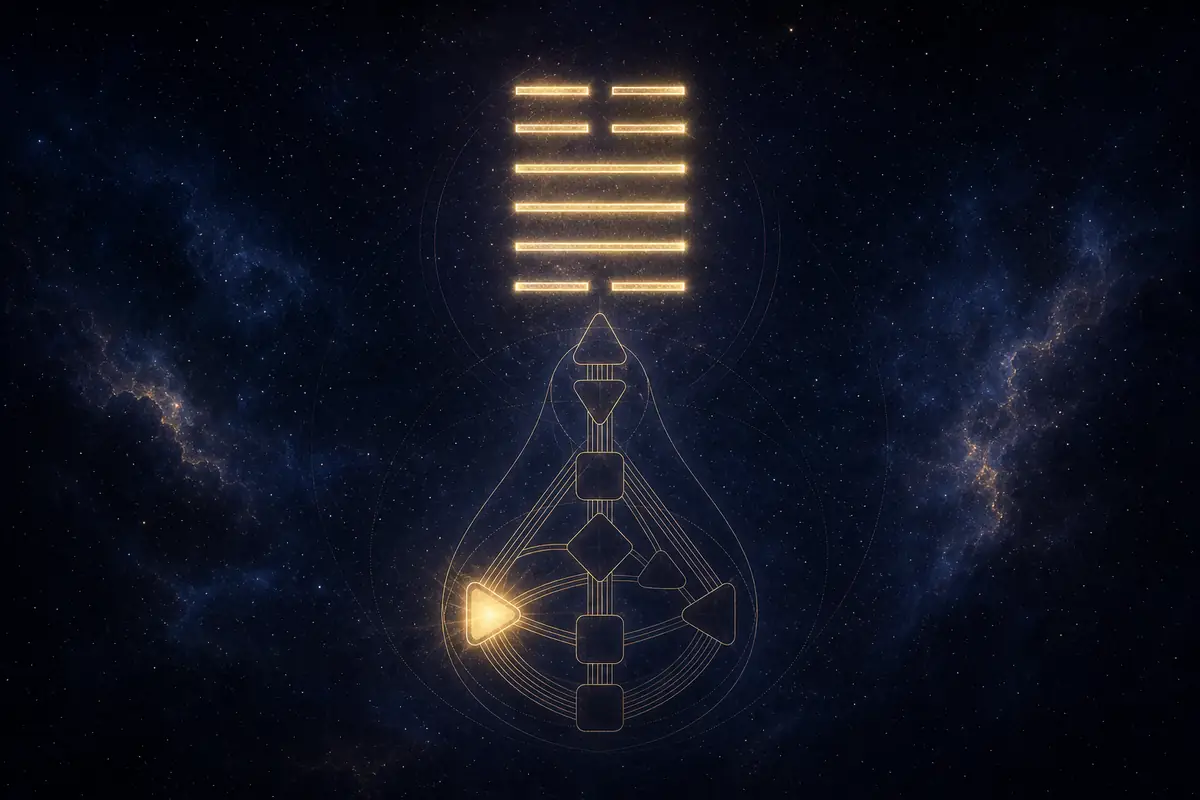
What is worth keeping, and what has already run its course? Gate 32 is the part of Human Design that asks the question about everything from habits to businesses to friendships. It is called Continuity and lies in the Spleen centre, the bodygraph's centre of instinct, wellbeing and survival. The theme is sensing which things can last and which are fading, a kind of quiet assessment rather than an argument. The gate covers 20°45' to 26°22' of Libra in the tropical zodiac, and a planet there on the Personality or Design side defines it.
A sense for what will last
The keynote is a felt judgement about durability. Someone with gate 32 defined may sense early that a plan has staying power, or that a commitment is fragile, and the sense usually arrives as a quick impression rather than a calculation. Examples might include a lease, a partnership, a subscription or a friendship that keeps being renewed without anyone deciding to. Human Design places this in the Spleen because the Spleen works in the moment and speaks once, so the impression is worth noting when it comes. It is a tendency to consider and to test against experience, and not a guarantee of being right.
Staying power as a standard
The keynote points to a standard of fit rather than endurance for its own sake. Something that suits its situation can keep going, while something forced against its nature may break. For this gate, continuity is a matter of fit. A job, a habit or a relationship can be kept for years if it suits the person, and the same thing endured out of obligation can end suddenly.
- Asking how long something could last is different from asking whether it feels good now.
- A project that has already survived one rough patch has shown something worth noting.
- Letting something end can be as much an expression of continuity as keeping it.
Maya, the cross this gate leads
When the Personality Sun is in gate 32, the Right Angle variant of the incarnation cross is the Right Angle Cross of Maya 3. It is written 32/42 | 62/61: the Personality Sun and Earth sit in gates 32 and 42, and the Design Sun and Earth in gates 62 and 61. A cross in Human Design is a summary of the life theme carried by those four activations, with the Personality Sun gate at its head. Naming the cross gives the gate a wider context, though the cross itself is read from the whole chart and not from this gate alone.
Ask what this will look like after a long time, not only on its best day.
Judging whether the effort will hold
Gate 32 forms the Transformation channel with gate 54, which lies in the Root centre. Gate 54 carries ambition and drive, and gate 32 carries the sense of whether the effort will hold. When both are defined, the channel connects the Spleen to the Root. When only gate 32 is defined, it is a hanging gate, reaching toward a partner it does not have, and the sense of durability may feel sharper around people or transits that supply gate 54. A single gate never defines a centre.
The fear underneath keeping things
The Spleen is the home of survival instincts, and one reading of this gate is that its judgement about what lasts can be tangled with worry about what might fail. A person with gate 32 may notice a pull to hold on to something because it is familiar, or to leave it early because it looks fragile. It helps to separate those two pulls from the actual question of fit. Writing down what has held up over several months gives the first impression something to be checked against.
Seasons rather than permanence
Continuity does not mean that everything ought to carry on forever. Things can be sound and still be seasonal, and the gate's judgement can recognise a good ending as readily as a good beginning. A person with this theme can come to see that keeping a job, a home or a habit past its season is not loyalty, and that the question of lasting is always asked about a specific thing in a specific period. A useful habit is to review a long-standing commitment on a schedule, such as once a year, instead of only when it starts to fail. A review asked for calmly can produce a better answer than a verdict reached in a bad week. That reading keeps the theme practical rather than anxious.
What Human Design is and how to read a bodygraph — read the guide →
Get your free Human Design chart and AI reading — create an account →
Frequently Asked Questions
Which everyday decisions might gate 32 colour?
Decisions about what to keep: whether to renew a commitment, continue a project or stay in a routine. The impression is described as quick rather than calculated, so it can help to note it when it arrives and test it later against experience. It is a prompt for observation, not a verdict, and the rest of the chart shapes how it is lived.
Has gate 32 anything to do with a fear of failure?
The Spleen carries survival instincts, and the gate's judgement about what lasts can be linked, as interpretation, to that background. Having the gate defined does not mean you will feel fear or fail at anything. It describes a theme of assessing durability, and what you feel in practice varies.
How does continuity differ from simply being stubborn?
Stubbornness holds on regardless of fit, while the theme of this gate is sensing whether something suits its situation well enough to last. Continuity can include ending something that has run its course. The distinction is one of reading, so it is worth checking against your own history of what has held up and what has not.
How do I test an impression of what will last?
Note the impression when it arrives, write the reason in a sentence, and check it against what has held up over the following months. Over time this shows whether the sense was picking up fit or only worry. The method is a practical suggestion, not part of Human Design doctrine, and it works as a record of your own history rather than a prediction.