Human Design Gate 60: Acceptance — Meaning & Theme
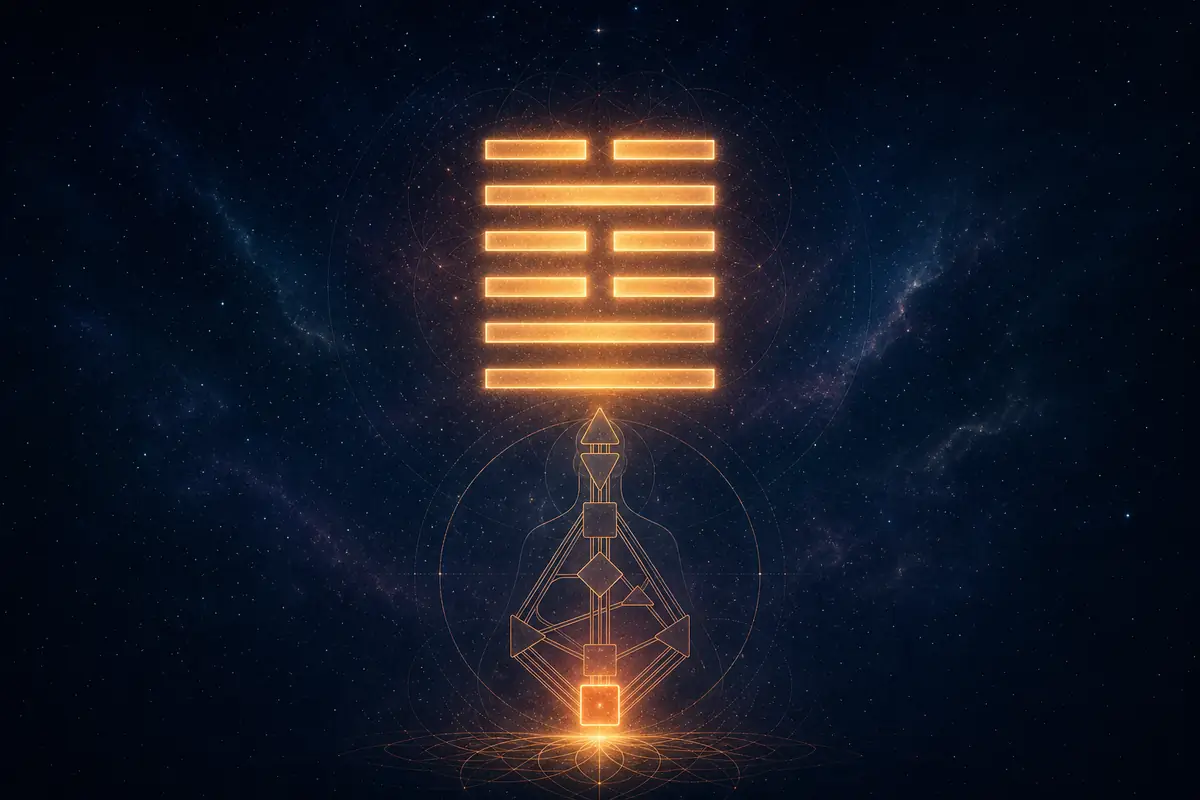
Working within a boundary instead of fighting it is the theme Human Design attaches to gate 60, named Acceptance. It belongs to the Root, the centre of pressure and drive, and its I Ching hexagram is Limitation. A planet on the Personality or Design side defines the gate. The Sun is here for about a week each year, from January 16 to January 22, across 26°22' Capricorn to 2°00' Aquarius. Gate 56 lies opposite on the wheel. Its channel partner is gate 3, Ordering, in the Sacral, and the two form 3-60 Mutation.
Making use of the edges
The keynote of acceptance can be read as a willingness to accept that some conditions are fixed and to build within them. One way to read the theme is as something other than resignation: limits give an effort its shape, and the pressure of the Root is better spent on what can change than on what cannot.
The hexagram name, Limitation, points the same way, towards a boundary that is worked with, a quieter attitude than either defying it or giving up.
The Laws 4 cross and the gate at its head
In Human Design a person's incarnation cross is built from four gates: the Sun and Earth of the Personality side, and the Sun and Earth of the Design side. With the Personality Sun in gate 60, the Right Angle variant is the Right Angle Cross of Laws 4, written 60/56 | 50/3. Gate 56 is the Earth on the same side, opposite the Sun, and gates 50 and 3 are the Design-side pair.
Gate 60 is the first gate named in that notation, which makes it the head of the cross. The Right Angle variant applies when the Personality Sun is here and the profile is a right-angle one; with another angle, a Sun in gate 60 belongs to a different cross. Everyone else with gate 60 in their chart holds the gate through some other planet, which is a different matter from the cross itself.
The cross belongs to the wider chart and is only one layer of it. A cross does not define a centre or decide a type, and Human Design describes it as a theme of purpose, not a prediction.
A cross is a way of reading a whole life's direction; one gate at its head is a starting point, not the story.
A limit that is not going to move
The Root is described in Human Design as a source of pressure and drive, and acceptance adds a specific question to it: what do I do with a limit that is not going to move? How steadily the pressure is felt depends on whether the Root is defined elsewhere in the chart, since a single gate gives a theme without a constant hum. Where it is felt, the question tends to return whenever the same wall appears again.
When change arrives in bursts
Gate 3, Ordering, completes the channel 3-60 Mutation when both are defined, joining the Root to the Sacral. Human Design reads the pairing as energy that arrives in bursts and alters what it touches, a rhythm that cannot be forced. With only gate 60 active, the channel is incomplete and gate 60 hangs, reaching toward people who carry gate 3. Neither gate defines a centre alone.
Waiting versus working inside the limit
Accepting a limit can look like inaction from the outside, and the difference is worth keeping straight. Passivity waits for the limit to disappear, while acceptance looks for what the limit still permits. A practical test is to ask what could be done today if the condition never changed, and to start there. Seen this way, a deadline, a diagnosis or a small flat can be a place to start from, not only something standing in the way, and the first small step is often easier to find once the condition is taken as given.
Is it a limit or an old assumption?
It is also worth noticing when something has been labelled a limit that is really a habit or an assumption. A gate about boundaries is most useful when it helps tell the two apart.
Practical examples are easy to find: a fixed budget, a schedule that cannot move, a body with a particular capacity. Each can be treated as a wall or as a frame, and the gate's theme leans toward the frame. That is an interpretation, and it asks for honesty about which constraints are real.
A birth in the second half of January puts the Sun in the gate, and anyone else meets the theme through other planets. A chart shows which ones, and on which side, activate it.
Whatever the route, the gate's theme is the same: make something workable out of the conditions at hand, and keep the pressure from curdling into resentment of them.
What Human Design is and how to read a bodygraph — read the guide →
Get your free Human Design chart and AI reading — create an account →
Frequently Asked Questions
Is the Cross of Laws 4 the same as having gate 60?
No. Anyone can carry gate 60 through a planet other than the Sun. The Right Angle Cross of Laws 4, written 60/56 | 50/3, applies when the Personality Sun is in gate 60 and the profile has a right angle, with the Earth in gate 56 and the Design side in gates 50 and 3. Other angles give other crosses.
Why do three gates besides 60 appear in its cross?
A cross is built from four gates: the Sun and Earth on the Personality side and the Sun and Earth on the Design side. For Laws 4 these are 60 and 56 on the Personality side and 50 and 3 on the Design side. Only gate 60 is the Sun's gate for the Right Angle variant.
Telling a real limit from an old assumption: where to start?
One test is to ask what evidence shows the condition is fixed, and who or what set it. Budgets, calendars and physical capacity can be checked; a habit or a borrowed rule often cannot. The gate describes a theme of working inside real boundaries, and it asks for honesty about which ones are real.
Is the gate defined without gate 3?
Yes. A planet in gate 60 is enough for the gate itself to be defined, even when gate 3 is not. That makes it a hanging gate, a standing theme reaching for a partner. The channel 3-60 and the centres it joins are defined only when both gates are present.