Human Design Gate 9: Focus — Meaning & Theme
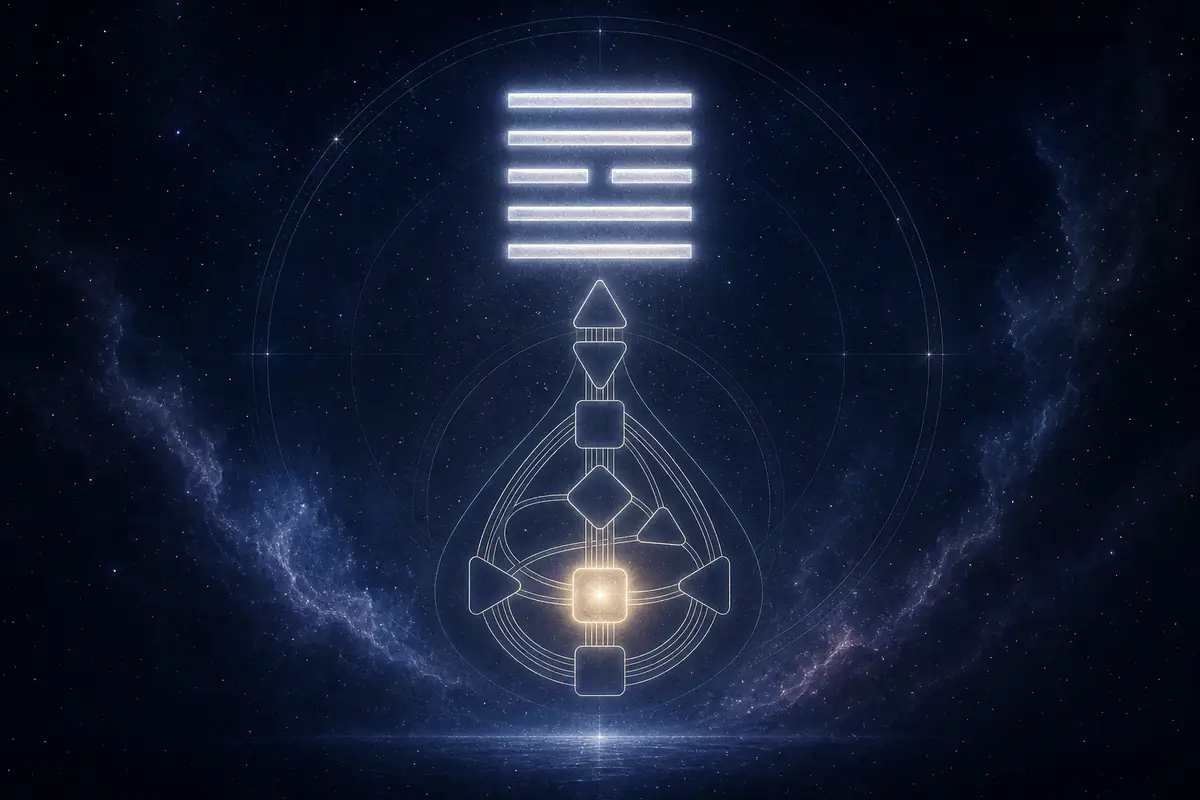
A single stubborn detail can hold someone's attention for a whole afternoon, and gate 9 is the Human Design gate behind that pull. Human Design calls it Focus, and it sits in the Sacral centre, where raw life-force looks for something specific to work on. A gate here tends to ask a plain question: which detail is worth sustained effort, and which can be left alone? Its hexagram is Small Taming, and the Sun passes through the gate from about November 27 to December 3 each year. Its partner is gate 52, together forming the Concentration channel, so the keynote is steady, patient attention rather than a sudden burst of inspiration.
Narrowing the field to a single detail
Most of the Sacral deals in general vitality. Gate 9 is the place where that vitality gets pointed. It tends to show up as the ability to stay with a small, specific piece of a larger task, such as one stubborn paragraph, one joint in a build, or one number in a spreadsheet, and keep returning until it is resolved. The gate does not decide what the detail should be. It supplies the appetite for fine-grained attention once something has been chosen. That makes it a good fit for work where accuracy matters more than speed, such as proofreading, repair, editing or careful bookkeeping, and a poor fit for tasks that reward skimming.
Choosing the detail worth a long hour
The Sacral in Human Design is a response centre: it answers what life puts in front of it rather than starting things on its own. For gate 9 this matters a great deal. Focus applied to a task the body has not said yes to can feel like grinding, however disciplined it looks from outside. Focus applied after a real yes tends to feel absorbing and almost effortless. The same gate can produce both experiences, and the difference is the quality of the response behind it. A useful test is whether the pull towards the detail is still there after a short break. If it is, the yes was probably real; if it only returns when a deadline looms, the effort is being pushed rather than answered.
When gate 9 is defined without gate 52
A gate is hanging when it is activated by a planet but its channel partner is not. If gate 9 is defined and gate 52 is not, the Concentration channel is incomplete. The gate is switched on and reaches for the missing partner, which sits in the Root centre and carries the stillness that makes sustained concentration possible. One reading is that the focus is real but unanchored, so it often borrows steadiness from other people who carry gate 52, and can feel more settled in their company.
- The reaching is a pull towards the missing partner, not a flaw in the gate.
- Quiet, low-pressure surroundings may help the gate behave as though gate 52 were present.
- A hanging gate is conditioned by whoever fills the gap, so it is worth noticing whose steadiness you borrow.
Small things that add up
The hexagram name, Small Taming, points the same way as the gate's keynote: modest, repeated effort rather than one grand gesture. Gate 9 can be read as the part of a chart that believes in accumulation. A page a day, a daily practice or a skill built in short sessions all suit it better than a heroic push. The risk of the theme is mistaking small for unimportant and skipping the detail that quietly holds everything else up.
The cost of staying too narrow
The risk of narrow attention is easy to describe in everyday terms. A mind trained on one detail can lose sight of the whole picture, polish a corner of a project that no longer matters, or treat everything outside the beam as noise. People with this gate defined may find that the same strength that makes them reliable also makes them hard to interrupt. Stepping back on purpose, and checking whether the detail still earns the attention, keeps the focus honest.
Gate 9 works best when the detail has been chosen by a genuine response from the body, not by a deadline alone. Ask what you are saying yes to before asking how long you can stay with it.
Putting the beam down
Sustained effort needs a way to end. Because the gate sits in a centre that runs on energy it can spend, the practical question is when the day's supply has been used. The sense of being finished is information too. Gate 9's opposite on the wheel is gate 16, the Throat gate of skills, and the pairing can be read as depth of attention set against breadth of practice. Recognising that you have given a task what it needs is part of working with focus rather than against it.
What Human Design is and how to read a bodygraph — read the guide →
Get your free Human Design chart and AI reading — create an account →
Frequently Asked Questions
If I have gate 9 defined, does that mean I concentrate well?
Not automatically. Gate 9 is activated when a planet falls in its zone of the wheel, from about 5°45' to 11°22' Sagittarius, and it tends to support attention to detail. How that plays out depends on the rest of the chart, especially whether the Sacral is responding, so treat it as a tendency to observe rather than a guarantee.
Which challenge comes with a hanging gate 9?
With gate 9 defined and gate 52 not, the gate reaches for a partner it does not have. The challenge can be steadiness: the focus is present, yet the stillness behind it comes and goes. It can help to notice which environments and which people make concentration feel easier, and to choose them deliberately.
During which part of the year is the Sun in gate 9?
Each year the Sun moves through gate 9 from about November 27 to December 3, the exact days shifting by about a day between years. People born in that window have the gate defined on the Personality side through their Sun, which is one of the simplest ways to see it in a chart.
How does gate 9 relate to gate 52?
Gate 52, Stillness, sits in the Root centre and forms the Concentration channel with gate 9. When both are defined, the channel is defined and the pairing is complete. When only one is defined, that gate hangs and reaches for the other, which is why partners and surroundings can feel so influential.