Rohini Nakshatra: Traits, Padas & Compatibility
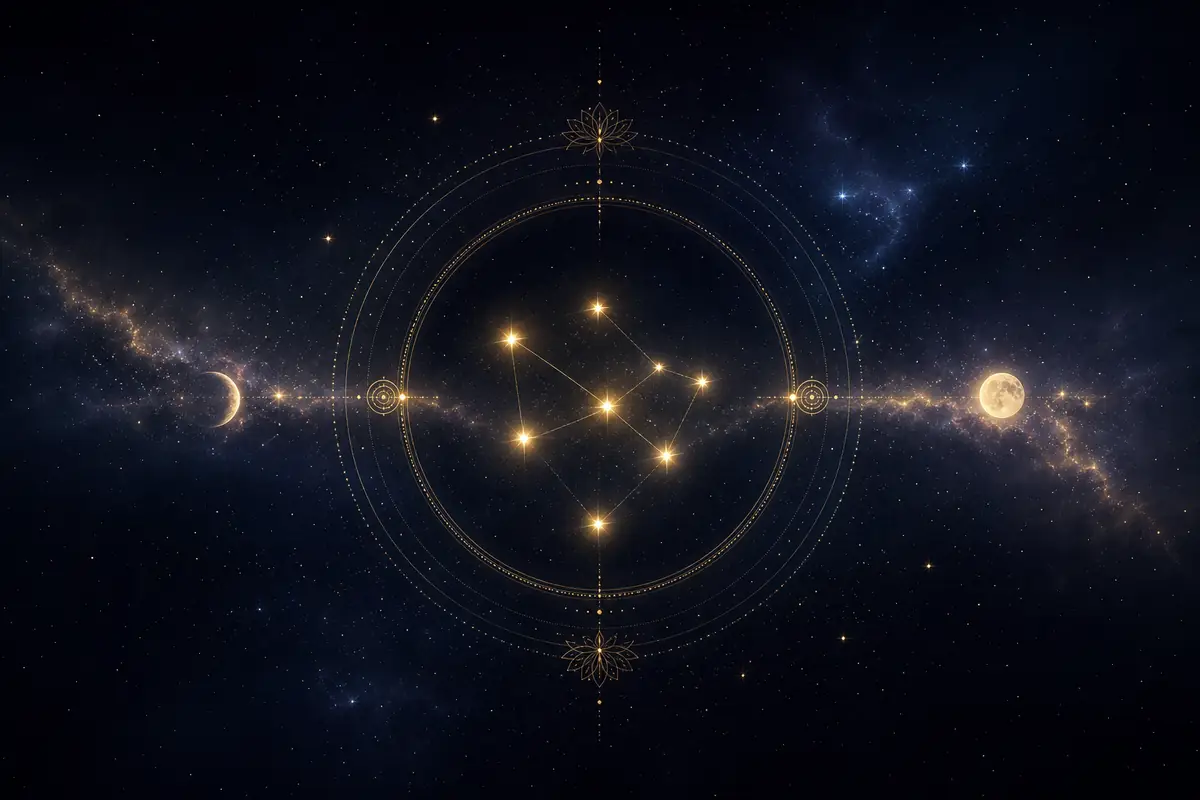
Rohini Nakshatra occupies 10°00′ to 23°20′ Taurus, the Moon's favourite dwelling — indeed, the Moon is said to linger here longer than in any other nakshatra out of sheer delight. Governed by Brahma-Prajapati, the creator of the universe, and ruled by the Moon itself, Rohini is the nakshatra of fertility, beauty, and creative abundance. Those born here often carry an almost magnetic allure, a deep love of the earth's pleasures, and an innate gift for bringing beautiful things into being.
Brahma-Prajapati, the lord of creatures, and the urge to multiply
The presiding deity is Brahma-Prajapati, the divine progenitor whose title means lord of creatures. He is not a craftsman god who assembles the world from parts; he is the one from whom things proliferate. That distinction sets Rohini apart from the other creative nakshatras. Rohini does not construct — it makes conditions in which growth happens by itself, the way a gardener does not build a plant. Natives succeed by cultivating rather than forcing: the business or body of work quietly thickens around them while more strenuous people wonder how.
Why the Moon lingers here, and what Daksha's curse cost Chandra
The classic story behind Rohini's reputation is a marital one. Chandra, the Moon, was married to the twenty-seven nakshatras, all daughters of Daksha, on the condition that he treat them equally. He did not: he stayed with Rohini and neglected the rest. Daksha cursed him to waste away, and only after the other gods intervened was the curse softened into the cycle of waxing and waning that the Moon still follows. It is a myth about Rohini's pull, and also its warning label: this nakshatra is so pleasant to remain in that staying becomes the problem, and the cost was borne by the one who could not leave.
Aldebaran, the red star that gives Rohini its name
Rohini spans 10°00′ to 23°20′ Taurus in the sidereal zodiac, and its ruling planet is the Moon, granting emotional richness, intuition, and deep receptivity to beauty. Its principal star is Aldebaran, the red eye of the bull and one of the brightest fixed stars in the sky. The name Rohini means the red one, and the colour is not incidental: across Vedic symbolism red belongs to blood, ripeness, and fertility — exactly this nakshatra's territory.
The ox-cart: abundance has to be hauled, not wished for
Rohini's symbol is a chariot or ox-cart, and the choice of vehicle matters. This is not a war chariot but a working cart, the thing that brings the harvest in from the field. Tradition assigns Rohini the rohana shakti, the power of growth and ascent, and the cart is what makes that growth count: something must carry the abundance from where it grew to where it is needed. The image accounts for Rohini's practical patience. Natives are not dreamers about beauty; they are the ones who load it up and move it, slowly, at ox pace, and arrive.
- Extraordinarily attractive — physically beautiful or magnetically charismatic.
- Sensuous and pleasure-loving, with refined taste in art, music, food, and beauty.
- Creative and fertile, gifted in bringing ideas into tangible form.
- Emotionally sensitive and deeply nurturing toward loved ones.
- Stubborn and fixed — once committed to a path, difficult to redirect.
- Possessive in love, sometimes to the point of jealousy.
Where possessiveness spoils the harvest
Whatever Rohini touches tends to grow — gardens, businesses, relationships, works of art — and its steadiness carries long projects to completion. The shadow is that a gardener who cannot bear to give anything away ends up with a crop rotting in the barn. Possessiveness, jealousy, and attachment to comfort are one reflex: refusing to let what has been cultivated leave. Rohini's developmental work is generosity with its own abundance — letting things seed the world without losing the sensitivity that made them beautiful.
Rohini is the garden of the zodiac — lush, fertile, abundant. Its lesson is to cultivate beauty generously, without clutching what grows there so tightly it cannot seed the world.
How the padas change what Rohini chooses to grow
- Pada 1 (10°00′–13°20′ Taurus) — Aries navamsha, ruled by Mars. Adds drive and ambition to Rohini grace; more assertive and entrepreneurially inclined.
- Pada 2 (13°20′–16°40′ Taurus) — Taurus navamsha, ruled by Venus. The most opulent pada: maximum sensuality, material comfort, artistic refinement, and beauty.
- Pada 3 (16°40′–20°00′ Taurus) — Gemini navamsha, ruled by Mercury. Intellectual curiosity joins Rohini warmth; gifted in communication, trade, and artisanal crafts.
- Pada 4 (20°00′–23°20′ Taurus) — Cancer navamsha, ruled by Moon. Deeply nurturing and emotionally rich; strong family orientation and healing gifts.
The serpent yoni and the Rohini–Mrigashira match Jyotish celebrates
Rohini's yoni animal is the serpent, and it pairs most harmoniously with Mrigashira, which shares that yoni. This is one of the classic great love matches of Jyotish: the questing, restless Mrigashira finds grounding in Rohini's warm abundance, while Rohini is enlivened by curiosity it would not have gone looking for. Rohini also connects well with other Taurus and Cancer nakshatras. Its most difficult dynamic is with Ardra, where Rahu's disruptive energy collides directly with the Moon-ruled need for emotional security.
New to Vedic astrology? Read the full guide →
Get your free AI kundli reading — create an account →
Frequently Asked Questions
Why is Rohini considered the Moon's favourite nakshatra?
In the classic myth, Chandra the Moon married all twenty-seven nakshatras but stayed with Rohini and neglected the others, for which their father Daksha cursed him to waste away. The curse was softened into the monthly cycle of waxing and waning. Traditional texts describe the Moon lingering here because of Rohini's exceptional beauty and abundance.
What is Rohini's star, and why is it called the red one?
Rohini's principal star is Aldebaran, the red eye of the bull and one of the brightest fixed stars visible from Earth. The name Rohini means the red one, after that colour — which in Vedic symbolism belongs to blood, ripeness, and fertility.
What does Rohini's ox-cart symbol represent?
It is a working cart rather than a war chariot — the vehicle that brings a harvest in from the field. It matches Rohini's rohana shakti, the power of growth, by supplying the part growth cannot do for itself: carrying what has ripened to where it is needed. It explains the nakshatra's patient, load-bearing practicality.
Why do Rohini and Ardra clash?
Rohini is Moon-ruled and organised around emotional security, steady growth, and keeping what it has cultivated. Ardra is ruled by Rahu and presided over by the storm god Rudra, and it is organised around upheaval. The friction is structural rather than personal: one nakshatra's growth is the other's stagnation.