Goat Chinese Zodiac: Personality, Traits & Years
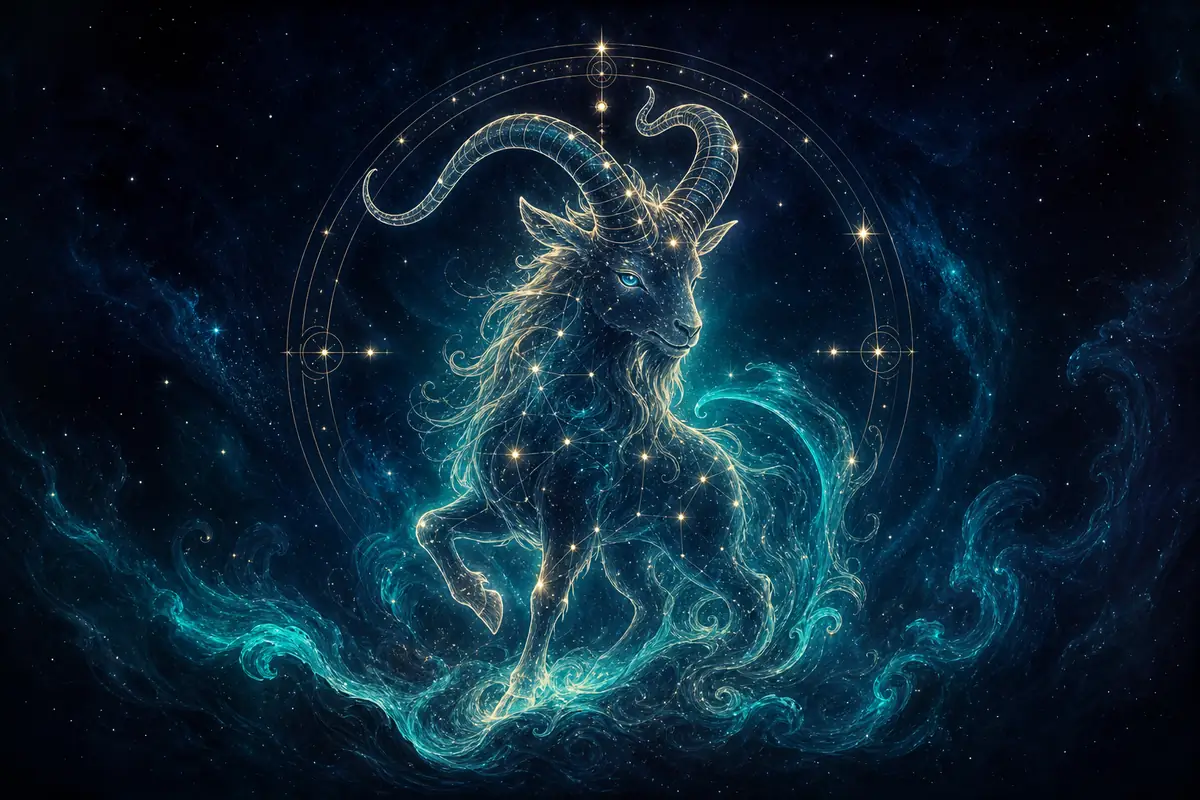
Creative, compassionate, and quietly sensitive, the Goat is the artist of the Chinese zodiac — and the sign that causes the most trouble in translation. It is called Goat, Sheep, and Ram in English depending on who is writing, and it carries a folk reputation for bad luck that measurably changes how many children are born in its years. Underneath both problems is a gentle, aesthetically gifted sign with more resolve than it is credited with.
Goat, Sheep, or Ram: why English cannot settle on a name
The eighth animal is 羊 (yáng), and Chinese does not make the distinction English insists on. 羊 is the general word for the whole caprine and ovine family; a goat is 山羊 (shānyáng, "mountain yáng") and a sheep is 綿羊 (miányáng, "cotton yáng"). Neither is the more correct translation, so English sources split — many render it Goat, others prefer Sheep, and Ram appears wherever a writer wants the horns. Traditional depictions show a horned, bearded animal, which is why Goat has become the usual choice. All three names mean the same sign, and none changes the reading.
The saying that nine goats in ten are incomplete
A persistent folk saying, 十羊九不全 ("of ten goats, nine are incomplete"), holds that people born in a Goat year end up with unhappy or unfulfilled lives. The belief is strong enough to be visible in the data: birth registrations dip in Goat years across parts of mainland China, Taiwan, and Hong Kong, as couples conceive early to land a Horse baby or wait for the Monkey. The most recent Goat year, 2015, followed that pattern, and maternity services in the region plan for it.
It is worth knowing how thin the foundation is. The saying is not part of classical Chinese astrology, which assigns the Goat no such penalty, and folklorists generally treat it as a late arrival rather than ancient tradition — one common explanation links it to hostility toward Empress Dowager Cixi, born in a Goat year. Whatever its origin, a superstition that shifts national birth statistics is a fact about the culture, not about the people born under the sign.
The Goat's gift is sensitivity as a strength — the ability to feel what others cannot, and to create from that feeling something that moves the world.
Gentle on the surface, immovable underneath
Goats translate feeling into work — art, music, writing, design, care — and go a long way to avoid open conflict. What that softness conceals is a quiet obstinacy: a Goat rarely argues, but a Goat who has decided something is very hard to move, and will continue in the chosen direction while the argument happens elsewhere.
- Creative — strong artistic instincts and a natural aesthetic sense.
- Empathetic — deeply attuned to others' emotional states.
- Imaginative — rich inner world that fuels original thinking.
- Generous — give freely of their time, care, and creative energy.
- Sensitive — deeply affected by criticism and conflict.
The costs are real. Conflict avoidance lets grievances accumulate unspoken, indecision stretches out choices a firmer sign would make in an afternoon, and a Goat short of reassurance grows dependent on whoever supplies it.
The Wei hour and the Goat's yin earth
The Goat governs the earthly branch 未 (Wèi) and the double-hour from 1 pm to 3 pm — the quiet stretch after noon, when the heat has passed its peak and the pace slows. Its fixed element is Earth and its polarity is yin, a combination that reads as receptive ground rather than solid rock: fertile, accommodating, slow to force anything. Its lucky numbers are 2 and 7, and its lucky colours are green, red, and purple.
One Goat year, five different elements
Each Goat year carries one of the five elements:
- Wood Goat — 1955: sociable and cooperative.
- Fire Goat — 1967: warmer and more outspoken than the type suggests.
- Earth Goat — 1979: practical, with a strong need for security.
- Metal Goat — 1991: the most resolute, and protective of what it loves.
- Water Goat — 2003: intuitive and easily affected by atmosphere.
- Wood Goat — 2015: idealistic and community-minded.
- Fire Goat — 2027: the next Year of the Goat.
The Chinese year begins at the lunar new year, so a January or early-February birthday needs checking against that year's date.
Work that suits a Goat's pace
Goats work best inside structure they did not have to build. Give them the frame and they fill it beautifully; ask them to invent one under time pressure and they stall.
- Fine arts, music, and creative writing
- Interior design, fashion, and textile work
- Nursing, social work, and childcare
- Teaching, especially in arts or humanities
- Therapy, counselling, and pastoral care
The Ox wants a schedule, the Goat wants a mood
The Goat belongs to the fourth Triangle of Affinity with the Rabbit and the Pig — three gentle, emotionally expressive signs sharing a love of beauty and comfort, and those pairings are tender and mutually nurturing. The Horse also matches well, bringing energy the Goat enjoys without demanding the Goat produce it. The clash is with the Ox, six places away on the wheel. The Ox measures a life in completed obligations and the Goat measures it in how things feel; each experiences the other's priorities as a rebuke, and the disagreement repeats rather than resolves.
Read the Chinese zodiac 2026 guide →
Get your free AI BaZi reading — create an account →
Frequently Asked Questions
Is the Chinese zodiac animal a goat, a sheep, or a ram?
All three. The Chinese character is 羊 (yáng), which covers goats and sheep alike; a goat is 山羊 and a sheep is 綿羊. The zodiac uses the general term, so translators choose freely. Traditional images show a horned, bearded animal, which is why Goat is the most common English rendering, but Sheep and Ram mean the same sign.
Are people born in the Year of the Goat unlucky?
There is a folk saying, 十羊九不全 — "of ten goats, nine are incomplete" — claiming Goat-year children end up with unfulfilled lives. It has no basis in classical Chinese astrology and is generally treated as a late invention, though it is believed widely enough to affect when couples have children.
Do fewer babies get born in Goat years?
Yes, measurably. Birth registrations dip in Goat years in parts of mainland China, Taiwan, and Hong Kong as couples time conception to land a Horse or Monkey child instead. The most recent Goat year, 2015, showed the pattern.
Which years are Goat years, and what element is each one?
Recent Goat years are Wood 1955, Fire 1967, Earth 1979, Metal 1991, Water 2003, and Wood 2015, with a Fire Goat year next in 2027. Metal Goats are the most resolute, Earth Goats the most security-minded, and Water Goats the most sensitive to atmosphere.