Human Design Gate 36: Crisis — Meaning & Theme
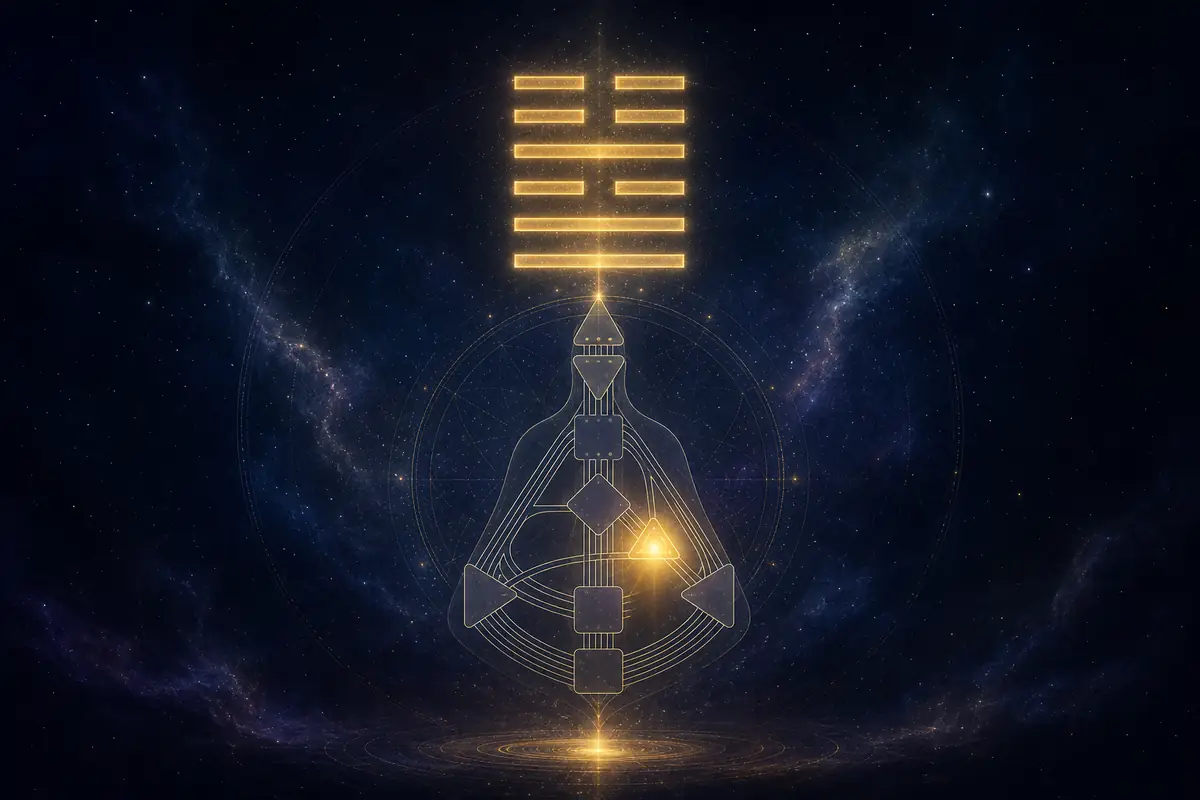
The word Crisis rarely sounds like an invitation. In Human Design, gate 36 carries the name for a reason that has less to do with disaster than with intensity: it describes the appetite for emotional experience, including the uncomfortable kind. The gate belongs to the Solar Plexus, the emotional centre, and a planet on the Personality or Design side defines it. Its hexagram is Darkening, and it spans 22°38' to 28°15' Pisces. The Sun passes through it in about the week of March 13 to March 18, and it forms a single channel with gate 35.
Why a gate would be named for trouble
The name is the first hurdle. Human Design reads Crisis as the experience of being thrown into something intense, and as the learning that follows. Someone with gate 36 defined can find that calm stretches feel flat, and that they respond fully when a situation turns emotionally charged. It does not mean their life will be crises. It describes a readiness for depth of feeling that others may avoid.
Because the gate sits in the Solar Plexus, its feelings are subject to the wave-like quality that Human Design ascribes to that centre, but only when the centre is defined, and a single gate does not define it. Without a complete channel, the person may feel the gate's pull in some company or situations rather than steadily.
Not yet seeing how it ends
The hexagram is Darkening. As interpretation, the name suggests light dimmed or withheld, which suits the keynote: a person in the middle of a crisis often cannot yet see how it will end. The gate treats that unlit stretch as part of the process, not as a sign that something has gone wrong. What emerges afterwards can be a deeper sense of what the person is capable of enduring and understanding, though the gate promises no particular outcome.
Friction waiting on the far side of the wheel
On the Rave Mandala every gate has a mirror, and the one facing gate 36 is gate 6, called Friction, also in the Solar Plexus. When the Personality Sun is in gate 36, the Earth sits in gate 6, so a person born in this week carries both at the same time. That is why anyone with a Sun here has this pair running through the Personality side of the chart from the start.
The two gates sit in one centre and complement each other. Gate 36 is about plunging into emotional experience, while gate 6 is about the friction of closeness, the way two people rub against each other in a relationship. One way to see the pairing is that the first supplies the intensity and the second tests how intimacy copes with it.
Whatever the Sun does, the Earth does the reverse. A gate and its opposite are two halves of one statement: the experience, and the friction that makes it real.
Learning to wait out intensity
A gate tied to crisis can create the urge to act immediately, to do something so that the discomfort stops. The practical lesson, as one reading puts it, is to let the intensity pass before deciding. An emotional peak is a poor moment for commitments, and the same situation often looks different a day later. This is a general habit, not a gate-specific rule.
Finding words for what was felt
Gate 36 forms the 35-36 channel, Transitoriness, with gate 35, Change, in the Throat. A channel is complete only when both gates are defined, and when it is the Solar Plexus and the Throat are linked. If gate 36 is defined without gate 35, it is a hanging gate and may reach toward that partner in other people, which can feel like finding words for an experience most easily when someone else supplies the language.
That link between feeling and speech is one reason the two gates are read together. What gate 36 lives through, gate 35 can describe, and the pair is concerned with how experience passes and is put into words.
Meeting other people's upheavals
A person with this gate may be unusually steady when others are in difficulty, since intensity is familiar to them and does not alarm them. That can make them a reliable presence, and it can also tempt them toward drama they did not need. Noticing whether a situation truly calls for engagement, or merely supplies the sensation, is a modest discipline that tends to pay off, for them and for the people who rely on their calm.
What Human Design is and how to read a bodygraph — read the guide →
Get your free Human Design chart and AI reading — create an account →
Frequently Asked Questions
Is a life full of crises implied by gate 36?
No. Human Design uses the word for intense emotional experience, not for an emergency. The gate describes a readiness for depth of feeling, and it is neutral about what a person does with it. Problems arise mainly when intensity is sought for its own sake or when decisions are made at its peak.
What helps someone wait out an intense moment with this gate?
A common-sense habit is to let the peak pass before committing to anything, since the same situation often looks different a day later. Naming the feeling aloud, or to someone trusted, can also take some pressure off. This is a general practice, not a gate-specific rule, and it suits any emotionally charged choice.
Can someone born in the Sun week of gate 36 avoid its theme?
Not in the sense of the chart: a Personality Sun in the gate defines it, with the Earth in gate 6. How the theme is lived is another matter. Human Design describes tendencies, and awareness of them tends to make the intense moments easier to wait out rather than act on.
Why does gate 36 share a centre with its opposite, gate 6?
Both gates belong to the Solar Plexus, and they face each other across the Rave Mandala. Gate 36 is about the experience of emotional intensity and gate 6 is about the friction of closeness. Sharing a centre means they speak about the same area of life from two sides.