Human Design Gate 7: Role of the Self — Meaning & Theme
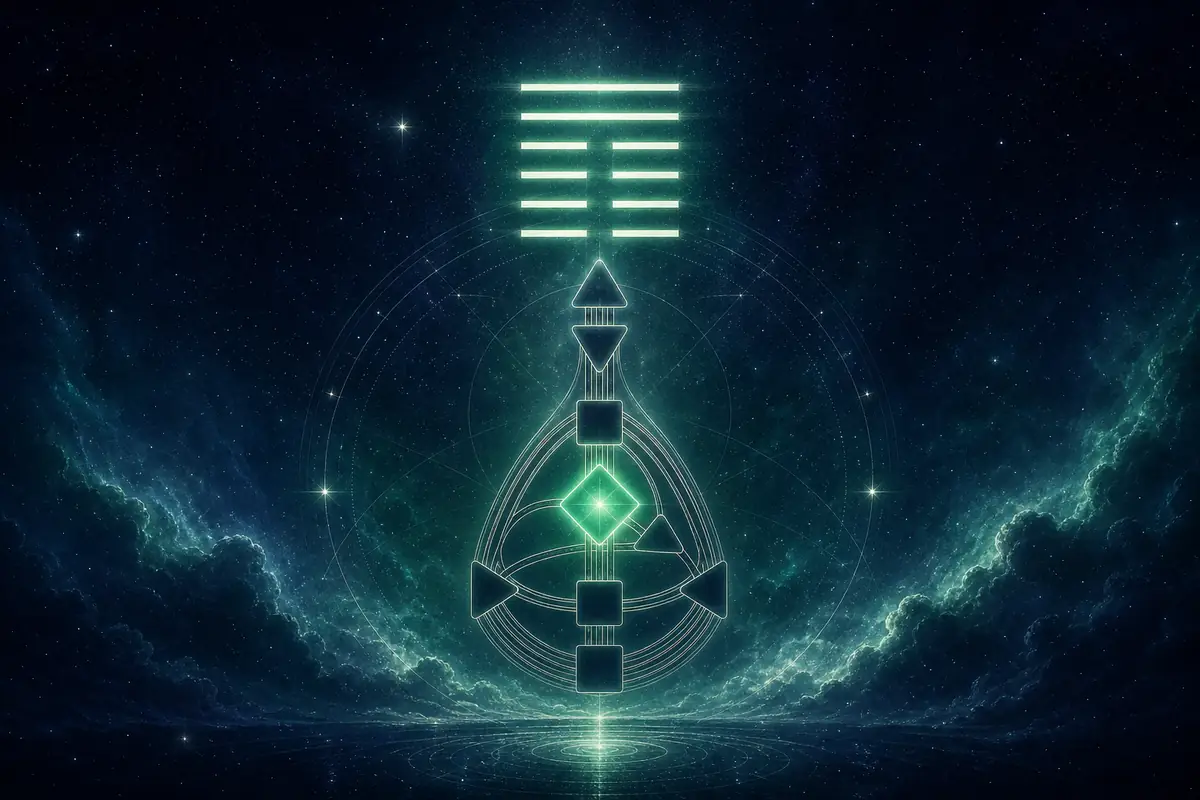
Most groups, sooner or later, ask who should point the way. Human Design takes that question and gives it to gate 7, called the Role of the Self. It sits in the G centre, the bodygraph's centre of identity and direction, and its theme is the part a person plays when others need a direction to follow. The gate is not a guarantee of leadership, and it does not mean you are a leader. It describes a way of relating to a group that shows up when a planet activates it, and it can be quiet or visible depending on the rest of the chart.
Gate 7 and gate 31 as the Alpha channel
Gate 7 forms the channel of Alpha with gate 31, which lies in the Throat centre. Gate 7 carries the direction and gate 31 carries the voice that gives it influence, so one way to see the pair is as a leader who can both see a way and say it plainly. When both gates are defined, the channel is complete and the theme runs as a standing part of the chart. If only gate 7 is defined, it is a hanging gate that reaches for its partner and can feel the pull of gate 31 most strongly when another person or a transit supplies it.
Direction that other people can accept
The keynote of the gate is less about issuing orders than about offering a path that a group can say yes to. The keynote can be taken to mean leadership by example and by logic, not by force. A person with gate 7 defined may find themselves naturally summarising where a conversation is heading, or proposing a plan that others can recognise as workable. The interpretation is a tendency, and it varies a great deal from one chart to the next. In a family or friendship circle it can look like the person who is asked where to eat, or how to handle a decision, more often than anyone else.
Reading what the moment calls for
- Some situations need a steady planner, others a quick decision.
- A good fit between leader and task usually looks effortless from outside.
- A poor fit is often felt as strain, even when the plan is sound.
The gate's theme can include this sensitivity to which role a situation requires, and a willingness to step back when someone else is better placed to lead. That flexibility is easy to overlook, because stepping back looks like doing nothing, yet it is often what makes a group function well.
Following well as part of leading
The hexagram attached to gate 7 is called The Army, an image of a group moving together under direction. One way to read the image is that an army holds together when it trusts its commander and the commander respects the troops. For this gate, that suggests leadership and following can be two halves of one relationship. Choosing carefully whom to follow, and why, is as much a part of the theme as taking the front position yourself. It also keeps leadership honest, because a leader who has practised following remembers what it is like to wait for clear instructions.
When nobody asked for a leader
A strong sense of direction can irritate people who did not request it. Someone with this gate may feel stuck between wanting to help the group and worrying about overstepping. A workable middle path is to offer a view and let others decide, rather than pressing for agreement. Saying out loud that the view is an offer makes it easier for others to disagree without it turning into a contest. Asking questions first, and proposing second, often gets the same direction accepted with far less resistance. The opposite gate on the wheel is 13, and the Sun passes through gate 7 for about a week, roughly August 5 to August 11, between 13°15' and 18°52' Leo.
Direction granted, not seized
One reading is that influence tends to last when it is granted by the group. Leadership taken by pressure may succeed briefly but is harder to keep. That reading goes with the practice of waiting to be recognised, and focusing first on being reliable and clear, which gives others a reason to trust the direction when it is offered. It fits the keynote, though it is an interpretation, not a requirement. Reliability is easy to underrate, yet groups often hand direction to whoever has shown they follow through.
A direction is worth giving only when people could genuinely choose to follow it. Ask whether your plan leaves them room to say yes.
What Human Design is and how to read a bodygraph — read the guide →
Get your free Human Design chart and AI reading — create an account →
Frequently Asked Questions
How should I read gate 7 if I am not a leader?
Treat it as a tendency toward giving direction in group settings, not as a job title. Plenty of people with the gate defined express it quietly, such as organising a project or helping others settle on a plan. Human Design describes the theme, but it does not say you must lead anyone.
Do people with gate 7 always need a partner in gate 31?
No. The Alpha channel needs both gates defined to be complete, but gate 7 alone is still a defined gate in the G centre. It is called hanging because it reaches toward gate 31. A chart can carry hanging gates, and the theme still operates through gate 7 itself.
Can gate 7 be defined without the Sun being in it?
Yes. A gate is defined when any planet on the Personality or Design side falls in it, so the Moon, another planet or the Design Sun can define gate 7 whatever the birth date. The Sun is in gate 7 only for about a week each year, which is one of several ways the gate can be activated. The bodygraph shows exactly which activations your chart carries.
How is gate 7 defined in a chart?
It is defined when a planet, on the Personality or Design side, falls between 13°15' and 18°52' Leo. A chart calculated from your birth details shows it as a coloured gate in the G centre. Births in roughly the week of August 5 to August 11 have the Sun in the gate, except near the edges of that window, where the exact birth time can decide it.