The Root Center in Human Design: Defined vs Undefined
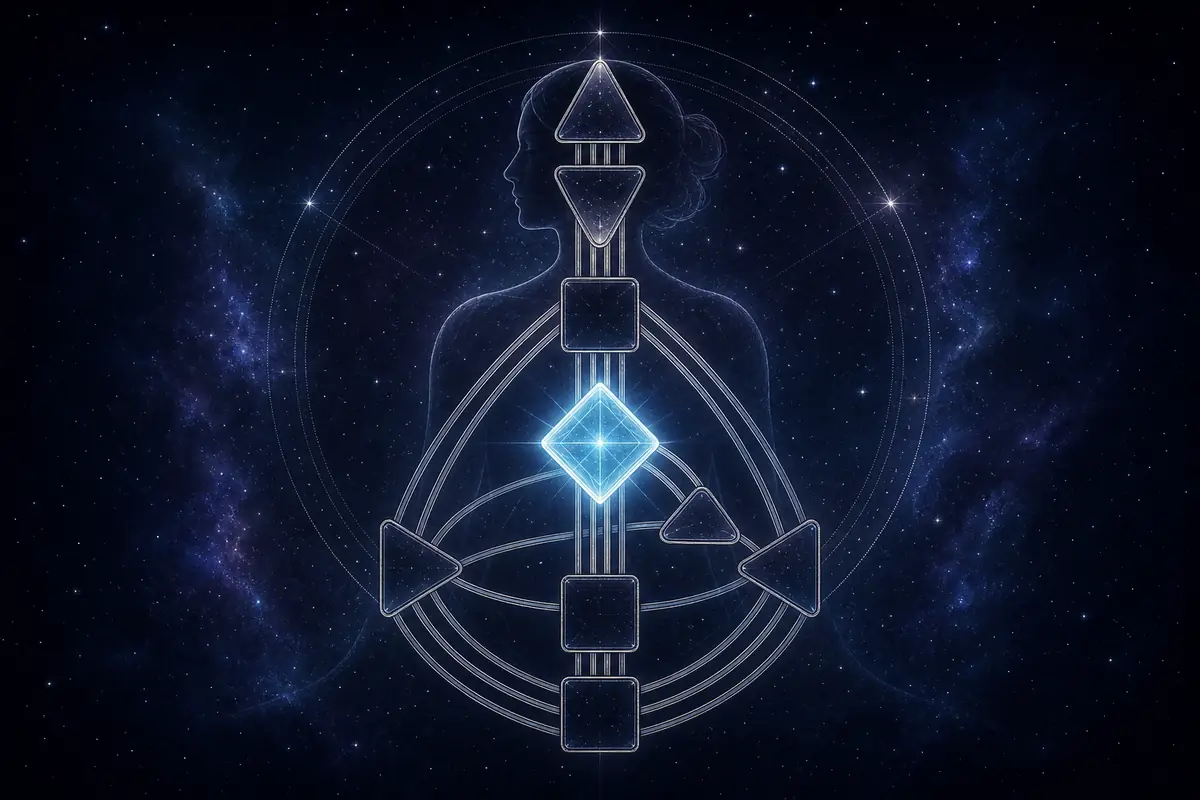
Of the nine centers, only the Root does two jobs at once. It's a pressure center, like the Head, generating a push that has to go somewhere — and it's also a motor, generating the adrenaline that actually powers the action the pressure demands. No other center in the bodygraph pairs those two roles. Understanding the Root means separating them: the push toward completion, and the fuel that carries it out.
The only center with two jobs
The Head Center is pure pressure with no motor attached — it pushes ideas down into the Ajna but generates no energy of its own. The Sacral, Heart, and Solar Plexus are motors without a pressure function. The Root is the single exception: pressure and motor, layered on top of each other. That combination is why Root pressure feels physical in a way Head pressure doesn't — it isn't just a mental itch for a question, it's stress hormone, adrenaline, moving through the body and demanding to be spent.
The pressure to be finished, not the pressure to start
It helps to name what kind of pressure this actually is. The Head's pressure is about beginning — it wants a question answered, a thought resolved. The Root's pressure runs the other direction: it's the push toward completion, toward resolving tension that already exists and getting free of it. That distinction matters practically, because Root pressure can masquerade as urgency to start something new when what it's actually signaling is an unfinished task still generating stress in the background.
Pressure that runs on its own clock
A defined Root means this push-toward-completion is a constant feature of your baseline, not something that spikes and vanishes with the room you're in. The specific channels involved shape the flavor — steady and rhythmic in some configurations, sudden and fear-adjacent in others — but the underlying fact is stability: you can generally predict how much pressure you're carrying, because it's yours and it doesn't disappear when you change environments.
- Adrenaline and the drive to complete tasks form a consistent internal baseline rather than fluctuating by room.
- Others often register a defined Root as either driven energy or as pressure being applied to them.
- The relevant skill is telling productive pressure apart from stress running on autopilot.
- Rest becomes available once a task is genuinely finished, not merely paused.
A borrowed countdown running out in your body
An open Root generates no adrenaline baseline of its own — but it absorbs and amplifies the adrenaline of defined-Root people and high-pressure environments nearby, often more intensely than the source feels it. The result is a body that registers urgency belonging to someone else's deadline, someone else's unfinished task, as if it were personally on the clock. The instinct that follows is rushing: trying to resolve pressure that was never actually yours as fast as possible, just to be free of the sensation.
- Stress and adrenaline levels shift sharply depending on environment and the people nearby.
- Ambient urgency from defined-Root people or deadline-driven settings can be absorbed and intensified.
- The habitual response is rushing decisions, tasks, or transitions to escape the pressure faster.
- The long-term capacity available here is genuine ease under pressure — not immunity to it, but no longer being driven by it.
The not-self question for an undefined Root is: 'Am I in a hurry to be free of pressure that was never mine to begin with?' Rushing to escape absorbed adrenaline is the signature conditioning of the open Root, and it's what produces sloppy decisions made faster than they needed to be.
Healthy adrenaline cycles vs. chronic rush
Healthy Root pressure moves in a cycle: tension builds, a real task gets completed, the pressure resolves, and rest follows until the next cycle begins. Chronic rush is what happens when that cycle never closes — when pressure is treated as something to outrun permanently rather than something to complete and release. For a defined Root, that means learning to recognize when a task is actually finished rather than just interrupted. For an undefined Root, it means recognizing that a good deal of the felt urgency was never generated by your own body in the first place, and that there's more time available than the sensation is claiming.
New to Human Design? Read the full guide →
Generate your free AI Human Design bodygraph →
Frequently Asked Questions
Why is the Root Center both a pressure center and a motor?
The Root is unique among the nine centers in combining both functions. Like the Head, it generates pressure that pushes for resolution. Like the Sacral, Heart, and Solar Plexus, it's also a motor that produces real energy — in this case, adrenaline. No other center in the bodygraph carries both roles at once.
How is the Root's pressure different from the Head Center's pressure?
The Head's pressure is mental and oriented toward beginning — it wants a question answered or a thought resolved. The Root's pressure is physical and oriented toward finishing — it's the drive to complete a task and release the tension attached to it, backed by actual adrenaline rather than an abstract mental itch.
Does a defined Root Center mean constant stress?
Not necessarily. A defined Root gives you a stable, predictable baseline of drive rather than stress that spikes with the environment. The task is distinguishing genuinely productive pressure from stress running unchecked — a defined Root is consistent, but consistency isn't automatically healthy without that discernment.
What's the difference between healthy adrenaline and chronic rushing?
Healthy adrenaline moves in a complete cycle — tension, real completion, release, rest. Chronic rushing happens when that cycle never closes, often because the pressure being felt was absorbed from someone else's deadline rather than generated by an actual unfinished task of your own, leaving no genuine completion point to rest at.