What Personalized Birth Chart Analysis Shows About You
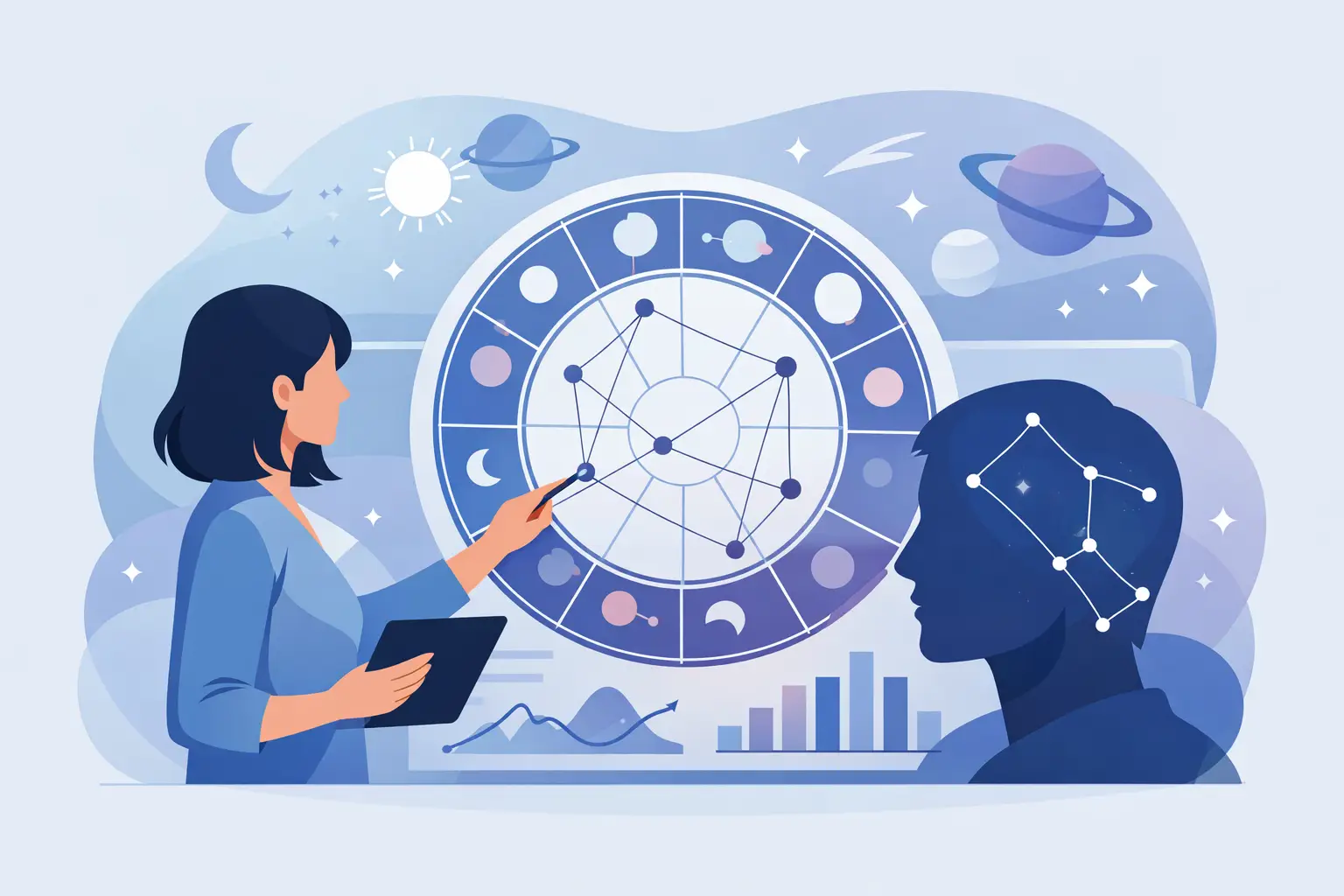
You can read your Sun sign in ten seconds and still miss the part of astrology that actually feels personal. A personalized birth chart analysis starts where generic horoscopes stop — with your exact birth date, time, and location, then builds a map that reflects your temperament, patterns, strengths, tensions, and timing.
That difference matters. Two people can share the same zodiac sign and move through life in completely different ways. One may be direct and restless, another cautious and private. One may thrive in visible leadership, another in quiet mastery. The birth chart explains why, because it looks at the full structure of the sky at the moment you were born rather than reducing your identity to one placement.
Want to see your own map? Create your account and generate your full birth chart in minutes.
What personalized birth chart analysis actually includes
At the core, a birth chart is a snapshot of planetary positions organized through signs, houses, and aspects. Signs describe style. Houses show where themes play out. Aspects reveal how different parts of the psyche interact. When those three layers are read together, the chart becomes more than symbolism — it becomes a working model of how someone tends to think, relate, choose, react, and grow.
A personalized reading usually starts with the foundation: Sun, Moon, and Rising. The Sun points to central identity and life force. The Moon speaks to emotional wiring, comfort, and instinctive needs. The Rising sign shapes first impressions, approach, and the way life tends to meet you. Even this basic trio often explains why someone feels unlike their Sun sign stereotype.
From there, the chart gets more precise. Mercury describes communication and thought patterns. Venus colors attraction, pleasure, values, and relationship style. Mars shows drive, anger, motivation, and how action is taken. Jupiter and Saturn often reveal growth, pressure, lessons, and long-term development. Outer planets add generational context, but their house placement and aspects make that context personal.
Then there are the houses. A strong 10th house emphasis can pull attention toward vocation, public life, and reputation. A loaded 4th house may make home, family, roots, and inner security central. A 7th house focus can intensify relationship themes, while a 12th house emphasis may point to introspection, solitude, spiritual processing, or material that takes longer to name clearly.
Why personalization changes the reading
The word personalized is not decorative here. It changes the quality of the interpretation.
A broad astrology reading might tell you that Venus in Libra values harmony. That can be true, but it is incomplete. If that Venus sits in the 6th house, relationships may be tied to acts of service, work rhythms, or everyday reliability. If it squares Saturn, affection may come with caution, restraint, or fear of rejection. If it trines Jupiter, warmth and generosity may flow more easily. The placement stays the same, but the lived experience shifts.
This is where many people either fall in love with astrology or dismiss it. If the reading stays generic, it feels thin. If it accounts for the actual chart structure, it starts naming things with uncomfortable accuracy. Not because the chart predicts every detail, but because it reflects enduring patterns in how a person processes life.
A good personalized birth chart analysis also respects nuance. A placement is rarely just “good” or “bad.” Saturn in the 7th house can correlate with delayed partnership, serious commitment, high standards, or relationship lessons that mature over time. For one person that feels heavy in their twenties and stabilizing later. For another it looks like careful partner selection from the start. Context changes everything.
Personalized birth chart analysis for relationships, career, and timing
Most people do not seek out astrology for abstract theory. They want clarity around love, work, identity, and the timing of change.
In relationships, the chart can reveal attachment patterns, attraction style, emotional needs, and conflict tendencies. Moon sign, Venus, Mars, the 7th house, and key aspects often show whether someone craves reassurance, independence, intensity, steadiness, or intellectual connection. This does not reduce chemistry to a formula, but it can explain repeated dynamics. If you keep attracting unavailable partners, overfunctioning in love, or confusing excitement with compatibility, the chart can help you see the pattern before you repeat it.
For career, the chart often speaks through the 10th house, Midheaven, Saturn, Jupiter, Mars, and the 2nd and 6th houses. Some charts point toward visibility, leadership, and public-facing work. Others favor research, counseling, design, analysis, healing, or building systems behind the scenes. Career astrology is most useful when it moves beyond the question, “What job should I do?” and asks, “What work style suits my energy, pace, values, and ambition?”
Timing is where astrology becomes especially practical. A natal chart describes the underlying blueprint, but transits show what is being activated now. A Saturn transit may coincide with pressure, responsibility, and restructuring. A Jupiter transit may open growth, confidence, or opportunity. Eclipses can bring sudden pivots or revelations. Timing does not remove free will, but it can help explain why a period feels tight, expansive, emotional, or transitional.
What makes a reading useful instead of overwhelming
Astrology can become dense very quickly. That is part of its richness and part of its barrier.
A useful reading does not drown you in terminology. It translates technical chart data into language you can apply. Instead of saying, “Mercury square Neptune in mutable signs,” it should also say, “You may think imaginatively but struggle with mixed signals, projection, or unclear communication under stress.” Technical accuracy matters, but translation matters just as much.
The best readings are layered. Beginners often need the chart organized into clear themes like personality, relationships, career, and current transits. More advanced users may want aspect patterns, house rulers, elemental balance, modalities, and cross-system comparison. Both are valid. The difference is not depth versus simplicity — it is whether the depth is presented in a way the reader can actually use.
This is one reason digital astrology tools have become more compelling. Instead of forcing users to piece together isolated interpretations from scattered sources, a well-designed platform can organize data, summarize patterns, and let people explore at their own pace. Astrologer AI, for example, reflects this shift by combining chart structure with conversational interpretation and multiple metaphysical systems in one workspace. That makes the experience feel less like decoding a static diagram and more like working with a living map.
One chart, multiple systems, richer context
For many people, Western natal astrology is the entry point, but it is not the only lens. When birth chart interpretation is paired with Vedic astrology, Chinese astrology, numerology, astrocartography, or Human Design, the reading can gain texture.
This does not mean every system will say the same thing in the same way. Sometimes they reinforce each other. Sometimes they frame the same life theme through different language. A person whose natal chart shows strong relational sensitivity may also see that reflected in Human Design openness or numerology themes around partnership and responsibility. Another person may notice that a career-oriented natal signature lines up with geographic activation in astrocartography.
The trade-off is that more information can create more noise if it is not organized well. Multi-system analysis works best when each layer adds clarity rather than competing for attention. The goal is not to collect spiritual labels. The goal is to see recurring signals across systems and understand what they mean in lived terms.
How to approach your own chart with realistic expectations
A personalized chart analysis is not a script for your life. It will not tell you exactly whom to marry, which city guarantees success, or what will happen on a specific Tuesday. It is better used as a mirror and timing tool than as a rigid answer machine.
That distinction matters because astrology is often most helpful when it gives language to what you already sense but have not fully articulated. It can validate a career tension you keep minimizing, a relational need you keep negotiating away, or a season of change that feels bigger than a passing mood. It can also challenge self-concepts that are too narrow. Many people discover strengths in their chart they had not claimed yet.
The more honest your approach, the more useful the reading becomes. Bring your questions, but leave room for complexity. Some patterns mature with age. Some placements are obvious early; others emerge through relationships, work, and life transitions. If a reading feels precise but not final, that is usually a good sign.
A chart is not there to box you in. It is there to help you recognize your patterns with more compassion, make decisions with better timing, and relate to your own nature with a little more precision. And sometimes that is exactly the kind of clarity that helps the next step feel possible.
Ready to see what your own chart shows? Create your account and get a personalized birth chart analysis from your real birth data today.
Frequently Asked Questions
What does a personalized birth chart analysis include?
It reads the full structure of the sky at your birth — signs, houses, and aspects together. The foundation is your Sun (central identity), Moon (emotional wiring), and Rising sign (first impressions and approach), then Mercury, Venus, Mars, Jupiter, and Saturn add communication style, relationship patterns, drive, growth, and lessons. House placements show where those themes play out in real life.
How is personalized analysis different from a generic reading?
A generic reading stops at placement meanings — for example, Venus in Libra values harmony. A personalized analysis adds the house and aspects: that same Venus in the 6th house ties relationships to everyday reliability, a Saturn square adds caution or fear of rejection, a Jupiter trine lets warmth flow more easily. The placement stays the same, but the lived experience shifts.
Can birth chart analysis help with relationships and career?
Yes — those are the most common questions it clarifies. In relationships, the Moon, Venus, Mars, and 7th house reveal attachment patterns, attraction style, and conflict tendencies, which helps you see repeated dynamics before you repeat them. For career, the 10th house, Midheaven, Saturn, Jupiter, Mars, and the 2nd and 6th houses describe the work style that suits your energy, pace, values, and ambition.
Does a birth chart analysis predict the future?
No — it is better used as a mirror and timing tool than a rigid answer machine. The natal chart describes your underlying blueprint, while transits show what is being activated now: a Saturn transit may coincide with pressure and restructuring, a Jupiter transit with growth and opportunity. Timing does not remove free will, but it can explain why a period feels tight, expansive, or transitional.